In September 2021, the book “Mensch. Maschine. Kommunikation.” will be published. It is edited by Sarah Brommer and Christa Dürscheid. One chapter (by Oliver Bendel) is in English and is entitled “Chips, Devices, and Machines within Humans: Bodyhacking as Movement, Enhancement, and Adaptation”. From the abstract: “This contribution about bodyhacking as movement, enhancement, and adaptation has three purposes. First, it aims to clarify terms in this field or to draw attention to the fact that they are used differently. Second, it wants to shed light on and explore a phenomenon that has a history but is also making history at the moment. Third, it wants to bring possible fields of application into play which remain unexplored, or which lie in the future. Literature analysis and own considerations and conclusions are used. The article first defines and distinguishes ‘biohacking’, ‘bodyhacking’, ‘human enhancement’, ‘animal enhancement’, ‘cyborg’, and ‘transhumanism’. It then addresses selected examples of bodyhacking. The author lists typical and known applications, ordered by their different objectives. He discusses actual and potential developments, for example as a response to potential crises and disasters (including pandemics) and in the context of satellites and foreign planets. On this basis, a brief philosophical discourse takes place leading to a summary and outlook. It turns out that bodyhacking brings opportunities with it, especially for the self-determined person, who takes his or her own body as a starting point and deals responsibly with the potentials. In this way, it can break with outdated conventions and create a new view of the body and its relationship with the environment. Moreover, it promises solutions to present and future problems. Of course, it also harbours moral and health risks.” The book is available for pre-order now. More information via www.narr.de/mensch-maschine-kommunikation-18471-1/.
The Digger Finger
Radhen Patel, a postdoc in MIT’s Computer Science and Artificial Intelligence Laboratory (CSAIL), and his co-authors Rui Ouyang, Branden Romero, and Edward Adelson presented a sharp-tipped robot finger equipped with tactile sensing to meet the challenge of identifying buried objects. “In experiments, the aptly named Digger Finger was able to dig through granular media such as sand and rice, and it correctly sensed the shapes of submerged items it encountered. The researchers say the robot might one day perform various subterranean duties, such as finding buried cables or disarming buried bombs.” (MIT News, 26 May 2021) The article, titled “Digger Finger: GelSight Tactile Sensor forObject Identification Inside Granular Media,” can be accessed at arxiv.org/pdf/2102.10230.pdf.
Towards Robot Enhancement
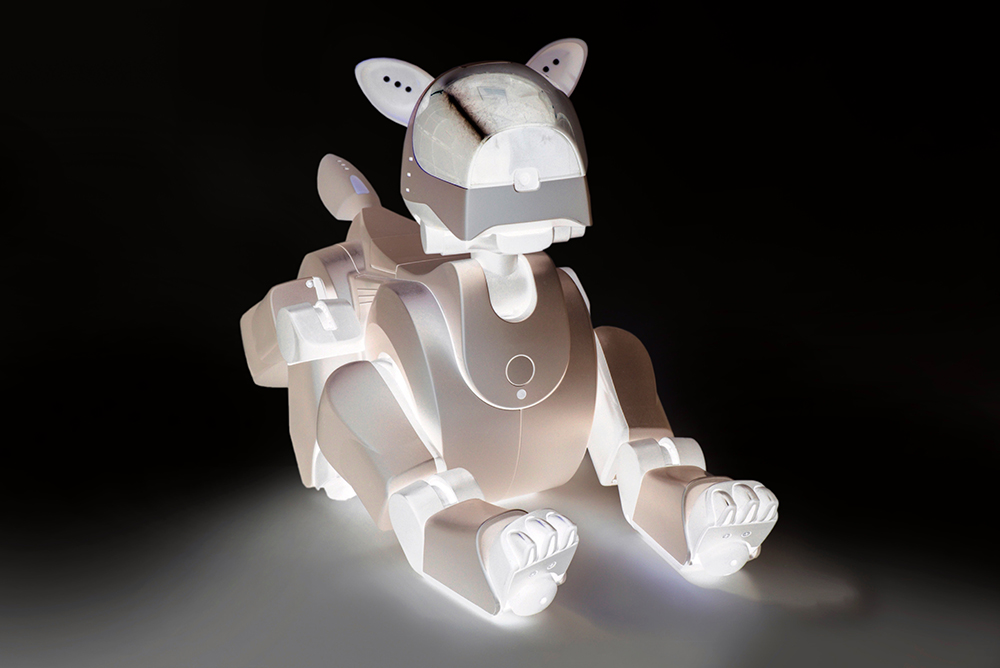
In an article for ICTkommunikation published on 21 May 2021 (only available in German), Oliver Bendel outlines the field of robot enhancement. Robot enhancement refers to the enhancement and associated modification or improvement of the robot by the user or a company, for example in functional, aesthetic, ethical or economic terms. Social robots are of particular interest. The article gives several examples of application: Pepper is dressed and accessorized, like REEM, a police robot used in Dubai. AIBO, a robotic dog, is covered in fur. To make a hugging robot smell, you rub it with scents. Or one covers a metal or plastic head with silicone skin or lengthens existing limbs. According to the Zurich-based scientist, a new field of work is needed so that all these measures can be carried out in a systematic and theoretically sound manner. The article entitled “Überlegungen zu Robot Enhancement” can be accessed here.
Animal-Computer Interaction
Clara Mancini (The Open University) and Eleonora Nannoni (University of Bologna) are calling for abstracts and papers for the Frontiers research topic “Animal-Computer Interaction and Beyond: The Benefits of Animal-Centered Research and Design”. They are well-known representatives of a discipline closely related to animal-machine interaction. “The field of Animal-Computer Interaction (ACI) investigates how interactive technologies affect the individual animals involved; what technologies could be developed, and how they should be designed in order to improve animals’ welfare, support their activities and foster positive interspecies relationships; and how research methods could enable animal stakeholders to participate in the development of relevant technologies.” (Website Frontiers) The editors welcome submissions that contribute, but are not necessarily limited, to the following themes: 1) “Applications of animal-centered and/or interactive technologies within farming, animal research, conservation, welfare or other domains”, and 2) “Animal-centered research, design methods and frameworks that have been applied or have applicability within farming, animal research, conservation, welfare or other domains Submission information is available through the website” (Website Frontiers). More submission information is available through the Frontiers website.
AI for Elephant Protection
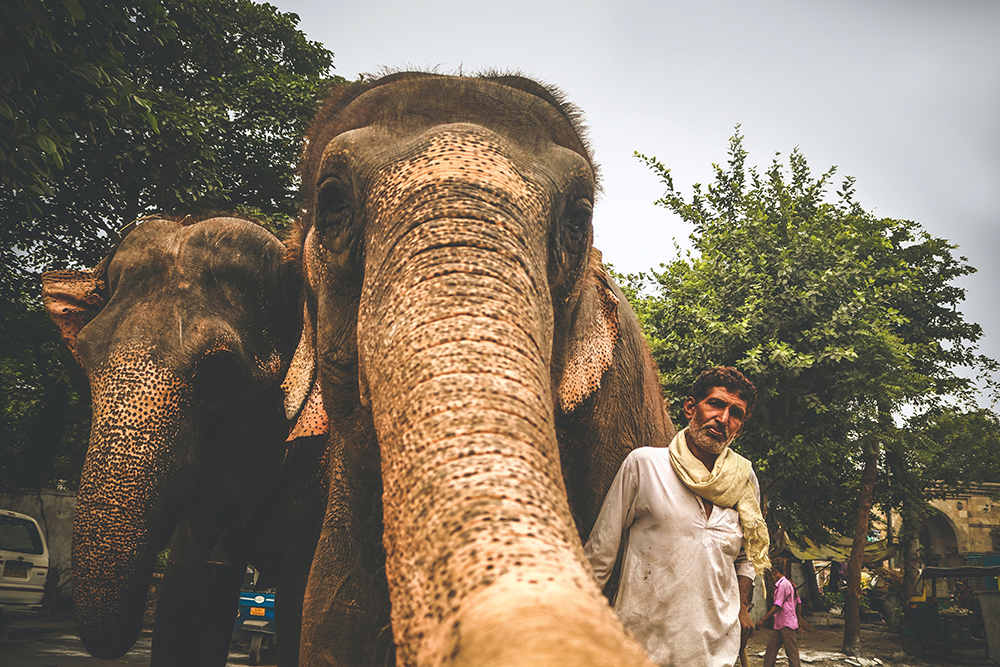
According to Afrik21, Olga Isupova (University of Bath) has just developed an AI system that allows to photograph and analyse large areas. Coupled with a satellite, it is designed to monitor African elephants, which are being decimated by poachers at the rate of one every 15 minutes. “The system collects nearly 5,000 square kilometres (km2) of photos highlighting elephants. The large size of African elephants makes them easier to spot. The results provided by the tool are then compared with those provided by human counting.” (Afrik21, 28 April 2021) Olga Isupova lists a number of advantages: “The programme counts the number of elephants by itself, which no longer puts the people who used to do this task in danger. The animals are no longer disturbed and the data collection process is more efficient …” (Afrik21, 28 April 2021) According to Afrik21, the AI expert intends to further develop her invention and eventually extend it to monitoring footprints, animal colonies or counting smaller species. The article can be accessed via www.afrik21.africa/en/africa-artificial-intelligence-to-combat-elephant-poaching/.
Basic Rights for Primates
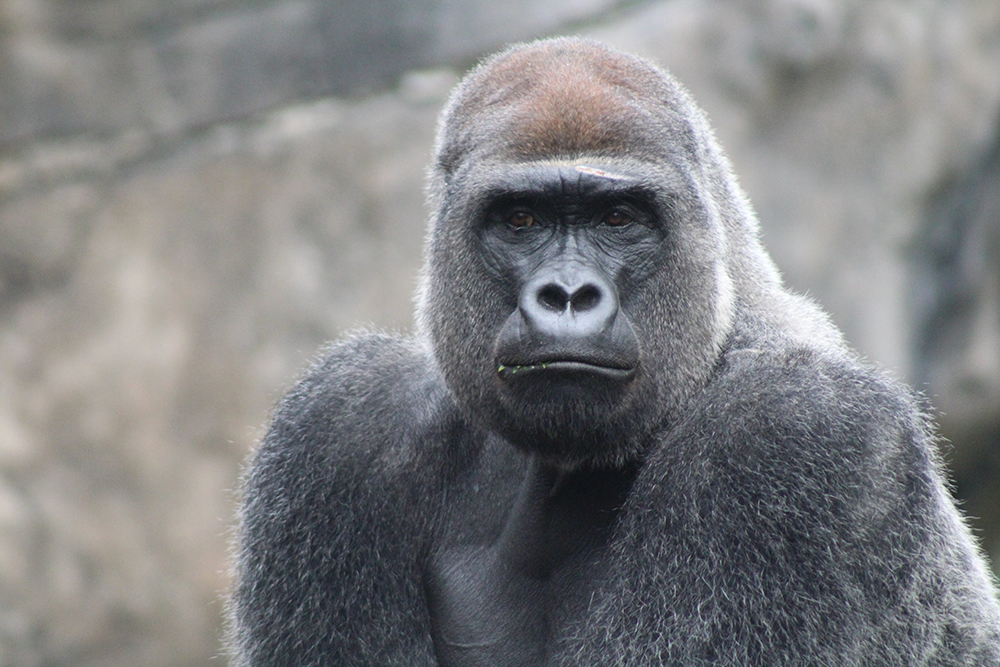
The initiative “Grundrechte für Primaten” (“Basic Rights for Primates”) went online with its website on April 30, 2021. The supporters demand the introduction of basic rights for non-human primates at cantonal constitutional level in Basel-Stadt. Among them are Simon Fankhauser (co-president Young Green Alliance), Dr. Charlotte E. Blattner (lawyer), Prof. Dr. Markus Wild (philosopher), Prof. Dr. Oliver Bendel (ethicist and business information systems scientist), Jaël Malli (musician), and Dr. Colin Goldner (head of the Great Ape Project Germany). Prof. Dr. Oliver Bendel goes particularly far in his requests: “I am for human rights for humans and for animal rights for animals. Basic rights such as the right to life and the right to physical integrity should go to all primates, but also to other mammals as well as reptiles and amphibians. The idea is not to protect animals from other animals, but from humans.” He combines animal ethics and animal welfare with machine ethics and develops animal-friendly machines with his teams. The initiative’s website can be reached at www.primaten-initiative.ch.
What We Can Do with Sex Robots
“Anthropomorphic love dolls – the successors of basic blowup dolls – are widely used these days, both in brothels and at home. While they can offer physical comfort and sexual satisfaction, they certainly cannot engage in more complex interactions with their counterparts. However, sex robots can – or at least they ought to. For now, the offer is not extensive and prices are high. The motor abilities of current models are limited and mainly focus on the head, while the body is usually identical to that of a love doll. Obviously, sex robots are made primarily to have sex with. But the user can also talk to and even form a relationship with them. This in mind, we are now starting to think about other applications of humanoid sex robots in the future – at least when their motor skills have improved. The possibilities might surprise you …” (De Gruyter Conversations, 23 April 2021) The full article is available via blog.degruyter.com/what-we-can-do-with-sex-robots-besides-the-obvious/ …
One Small Flight for Ingenuity
“That’s one small flight for Ingenuity – one giant journey for mankind.” This can be said after the successful experiment on 19 April 2021 with the tiny helicopter on Mars (photo: screenshot from NASA livestream). Ingenuity flew vertically into the air, took a selfie with its shadow, and landed safely back on the ground. The red planet is associated with many expectations and aspirations. At the moment, the surface is being explored in an unprecedented way. In a few years, humans are expected to travel to Mars. In doing so, they will also need advice and support. Because the personnel on Earth are far away, a voice assistant is a possible solution. SPACE THEA is a voicebot that shows empathy (but doesn’t have it, of course). Like GOODBOT and BESTBOT, she recognizes user problems – but unlike those chatbots, she has a voice. SPACE THEA will be developed until August 2021 under the supervision of Prof. Dr. Oliver Bendel at the School of Business FHNW. The project aims to cover several scenarios on the flight to Mars. However, a voicebot could also be useful on the planet itself, for example to control a tiny helicopter.
A Four-legged Robocop
In New York City, police have taken a Boston Dynamics robot on a mission to an apartment building. Spot is a four-legged model that is advanced and looks scary to many people. The operation resulted in the arrest of an armed man. Apparently, the robot had no active role in this. This is reported by Futurism magazine in a recent article. It is also noted there that certain challenges may arise. “The robodog may not have played an active role in the arrest, but having an armed police squadron deploy a robot to an active crime scene raises red flags about civil liberties and the future of policing.” (Futurism, 15 April 2021) Even Boston Dynamics robots are not so advanced that they can play a central role in police operations. They can, however, serve to intimidate. Whether the NYPD is doing itself any favors by doing so can be questioned. The robots’ reputation will certainly not benefit from this kind of use.
Robots that Spare Animals
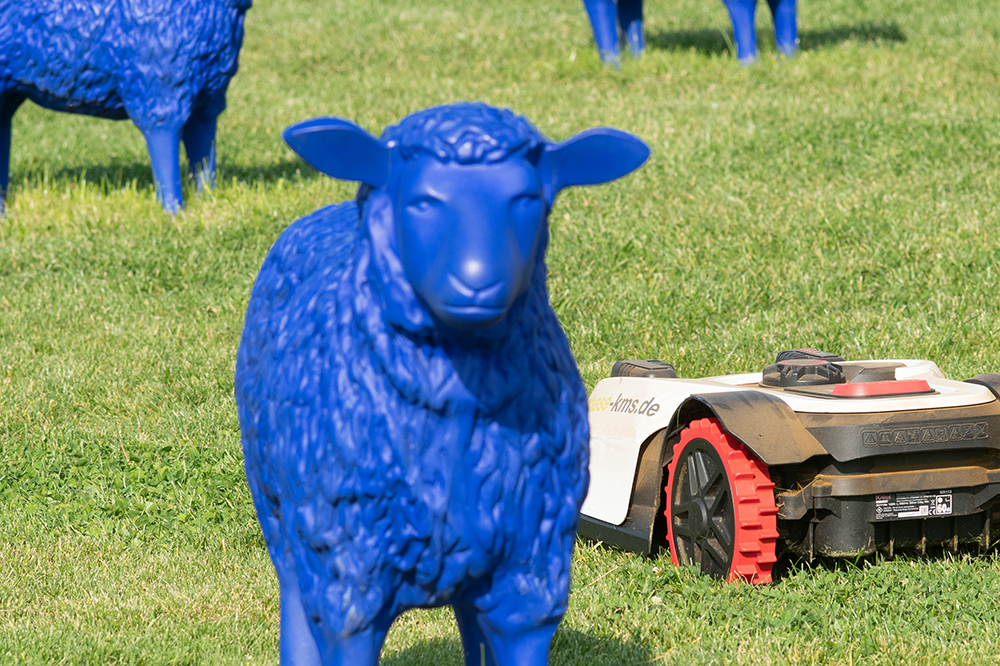
Semi-autonomous machines, autonomous machines and robots inhabit closed, semi-closed and open environments, more structured environments like the household or more unstructured environments like cultural landscapes or the wilderness. There they encounter domestic animals, farm animals, working animals, and wild animals. These creatures could be disturbed, displaced, injured, or killed by the machines. Within the context of machine ethics and social robotics, the School of Business FHNW developed several design studies and prototypes for animal-friendly machines, which can be understood as moral and social machines in the spirit of these disciplines. In 2019-20, a team led by Prof. Dr. Oliver Bendel developed a prototype robot lawnmower that can recognize hedgehogs, interrupt its work for them and thus protect them. Every year many of these animals die worldwide because of traditional service robots. HAPPY HEDGEHOG (HHH), as the invention is called, could be a solution to this problem. This article begins by providing an introduction to the background. Then it focuses on navigation (where the machine comes across certain objects that need to be recognized) and thermal and image recognition (with the help of machine learning) of the machine. It also presents obvious weaknesses and possible improvements. The results could be relevant for an industry that wants to market their products as animal-friendly machines. The paper “The HAPPY HEDGEHOG Project” is available here.