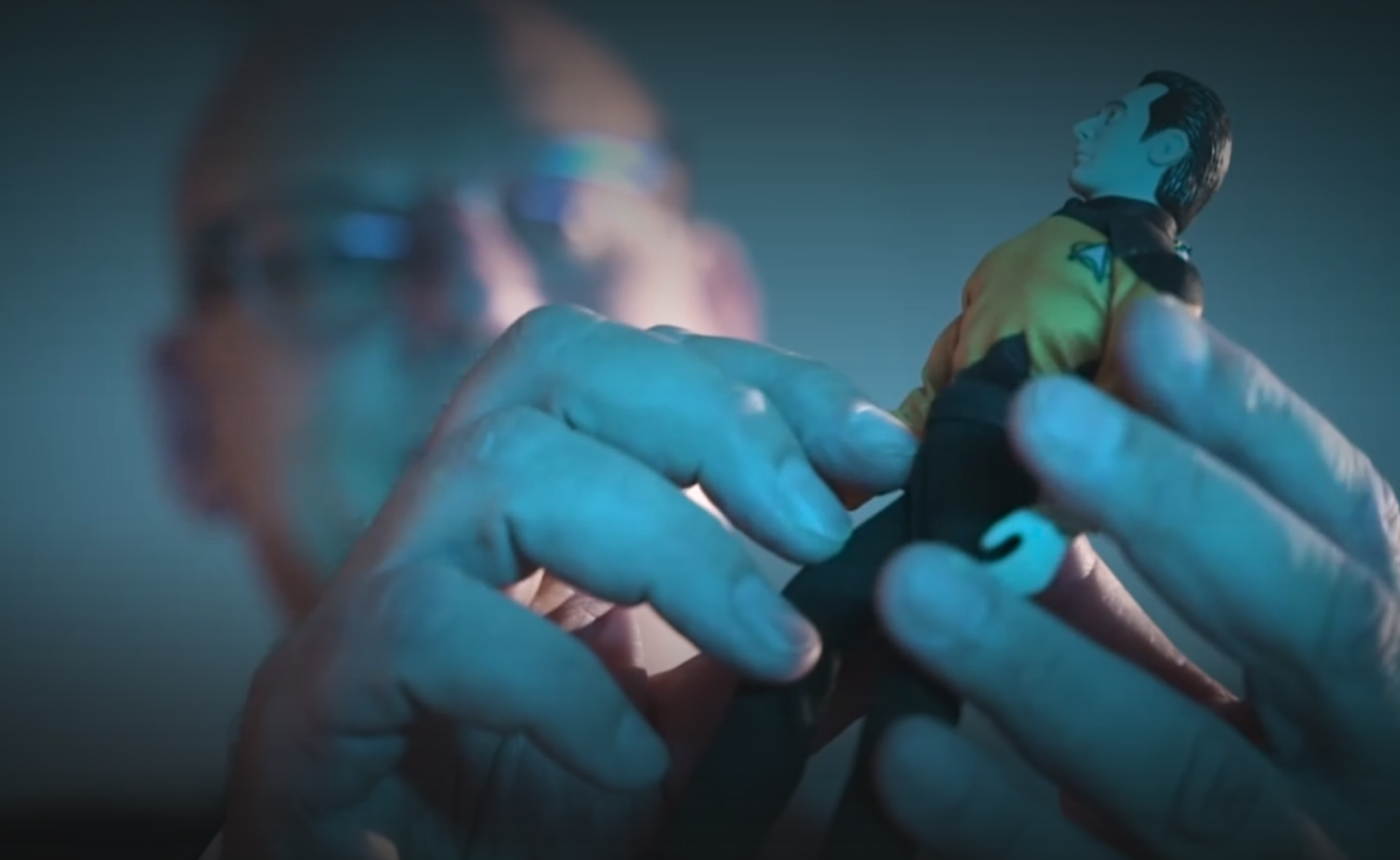
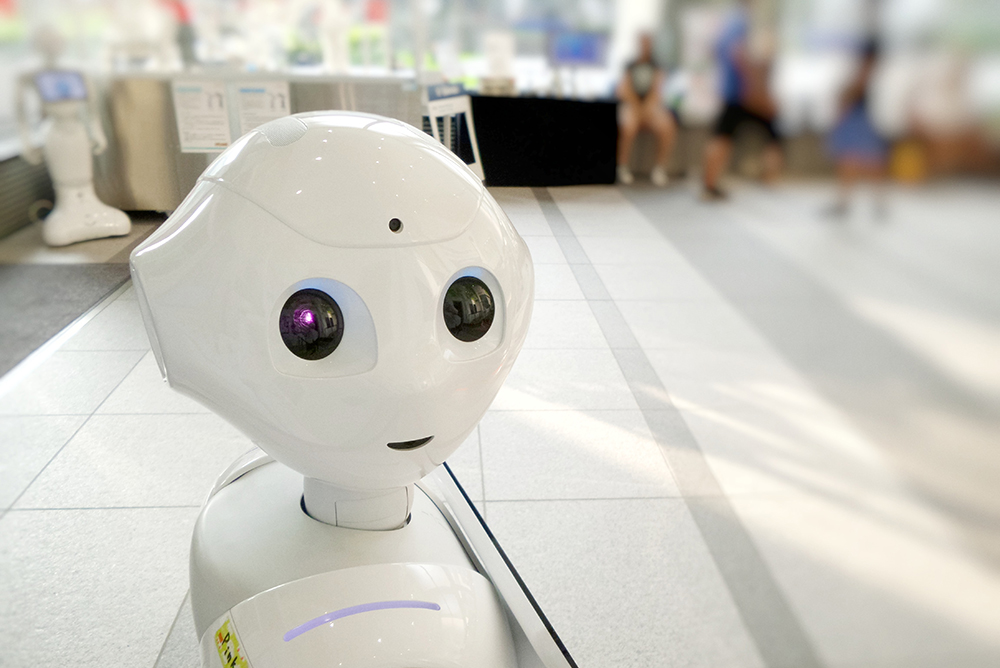
How can you make social robots out of simple, soft shapes and objects, i.e. robots for interacting with people and animals? Under the supervision of Prof. Dr. Oliver Bendel, Vietnamese students Nhi Hoang Yen Tran and Thang Vu Hoang are investigating this question in the project “Simple, Soft Social Robots” at the School of Business FHNW. They are using Hugvie from the Hiroshi Ishiguro Laboratories as a basis – these labs are particularly famous for the Geminoid and for Erica. But hugging robots like Telenoid also come from them. The latest product from this series is Hugvie. A pocket for a smartphone is attached to its head. People who are far away from each other can talk to each other and have the feeling of hugging and feeling each other. But what else can you do with Hugvie and similar forms? Can you make them conversationalists themselves, can you teach them to move their limbs and be active in other ways? And what does such robotization of simple, soft forms and objects mean for everyday life and society?
Care Robots with New Functions
The symposium “Applied AI in Healthcare: Safety, Community, and the Environment” will be held within the AAAI Spring Symposia on March 22-23, 2021. One of the presentations is titled “Care Robots with Sexual Assistance Functions”. Author of the paper is Prof. Dr. Oliver Bendel. From the abstract: “Residents in retirement and nursing homes have sexual needs just like other people. However, the semi-public situation makes it difficult for them to satisfy these existential concerns. In addition, they may not be able to meet a suitable partner or find it difficult to have a relationship for mental or physical reasons. People who live or are cared for at home can also be affected by this problem. Perhaps they can host someone more easily and discreetly than the residents of a health facility, but some elderly and disabled people may be restricted in some ways. This article examines the opportunities and risks that arise with regard to care robots with sexual assistance functions. First of all, it deals with sexual well-being. Then it presents robotic systems ranging from sex robots to care robots. Finally, the focus is on care robots, with the author exploring technical and design issues. A brief ethical discussion completes the article. The result is that care robots with sexual assistance functions could be an enrichment of the everyday life of people in need of care, but that we also have to consider some technical, design and moral aspects.” More information about the AAAI Spring Symposia is available at aaai.org/Symposia/Spring/sss21.php.
Cobots in Healthcare
After several postponements, the symposium “Applied AI in Healthcare: Safety, Community, and the Environment” will be held within the AAAI Spring Symposia on March 22-23, 2021. One of the presentations is titled “Co-Robots as Care Robots” (co-robots are also called cobots). The authors of the paper are Oliver Bendel, Alina Gasser, and Joel Siebenmann. From the abstract: “Cooperation and collaboration robots, co-robots or cobots for short, are an integral part of factories. For example, they work closely with the fitters in the automotive sector, and everyone does what they do best. However, the novel robots are not only relevant in production and logistics, but also in the service sector, especially where proximity between them and the users is desired or unavoidable. For decades, individual solutions of a very different kind have been developed in care. Now experts are increasingly relying on co-robots and teaching them the special tasks that are involved in care or therapy. This article presents the advantages, but also the disadvantages of co-robots in care and support, and provides information with regard to human-robot interaction and communication. The article is based on a model that has already been tested in various nursing and retirement homes, namely Lio from F&P Robotics, and uses results from accompanying studies. The authors can show that co-robots are ideal for care and support in many ways. Of course, it is also important to consider a few points in order to guarantee functionality and acceptance.” More information about the AAAI Spring Symposia is available at aaai.org/Symposia/Spring/sss21.php.
Little Sophia
Hanson Robotics is most famous for Sophia. Now the Hong Kong-based company is preparing to launch a new robot. According to the website, Little Sophia is the little sister of Sophia and the newest member of the Hanson Robotics family. “Little Sophia can walk, talk, sing, play games and, like her big sister, even tell jokes! She is a programmable, educational companion for kids, that will inspire children to learn about coding, AI, science, technology, engineering and math through a safe, interactive, human-robot experience. Unlike most educational toys designed by toy companies, Little Sophia is crafted by the same renowned developers, engineers, roboticists and AI scientists that created Sophia the Robot.” (Website Hanson Robotics) In photos, Little Sophia looks even creepier than Sophia. In videos, this impression is no different. The boy in the photo could be Little Sophia’s brother. What is special about her is that she has a wide range of facial expressions. It must be emphasized that, as in the case of Sophia, this is not a virtual face, but a real one. From a technical point of view, this is without a doubt an interesting product.
The Robot Called HAPPY HEDGEHOG
The paper “The HAPPY HEDGEHOG Project” by Prof. Dr. Oliver Bendel, Emanuel Graf and Kevin Bollier was accepted at the AAAI Spring Symposia 2021. The researchers will present it at the sub-conference “Machine Learning for Mobile Robot Navigation in the Wild” at the end of March. The project was conducted at the School of Business FHNW between June 2019 and January 2020. Emanuel Graf, Kevin Bollier, Michel Beugger and Vay Lien Chang developed a prototype of a lawn mowing robot in the context of machine ethics and social robotics, which stops its work as soon as it detects a hedgehog. HHH has a thermal imaging camera. When it encounters a warm object, it uses image recognition to investigate it further. At night, a lamp mounted on top helps. After training with hundreds of photos, HHH can quite accurately identify a hedgehog. With this artifact, the team provides a solution to a problem that frequently occurs in practice. Commercial robotic mowers repeatedly kill young hedgehogs in the dark. HAPPY HEDGEHOG could help to save them. The video on informationsethik.net shows it without disguise. The robot is in the tradition of LADYBIRD.
Hyundai Now Creates Tigers
Hyundai Motor Group has revealed a robot named TIGER, which stands for Transforming Intelligent Ground Excursion Robot. According to the company, it’s the second Ultimate Mobility Vehicle (UMV) and the first designed to be uncrewed. “TIGER’s exceptional capabilities are designed to function as a mobile scientific exploration platform in extreme, remote locations. Based on a modular platform architecture, its features include a sophisticated leg and wheel locomotion system, 360-degree directional control, and a range of sensors for remote observation. It is also intended to connect to unmanned aerial vehicles (UAVs), which can fully charge and deliver TIGER to inaccessible locations.” (Media Release, 10 February 2021) A video can be viewed here. With TIGER, the company has developed a very interesting proof of concept. The combination of legs and wheels in particular could prove to be the solution of the future.
Ariana Grande Bows to “Metropolis”
Ariana Grande walks in the footsteps of Fritz Lang with her video “34+35”. The director and actor is famous for his science fiction film “Metropolis” from 1927, in which a robot transforms into an artificial, human-looking woman, the copy of the real Maria (aka Mary). The video, which quotes the famous role model, was produced by Director X. V Magazine writes: “34+35” is the second track of Grande’s recent release “Positions”, “but it is first in sexually charged metaphors” (V Magazine, 17 November 2020). The robot in the “campy video” has the pretty head of Ariane Grande from the beginning. The point is to bring it to life. This happens in an apparatus reminiscent of the one in “Metropolis”. Of course, Ariana Grande is also the scientist who performs the experiment, so she corresponds to the crazy guy named Rotwang. Some lines in the song suggest that the Ariana Grande robot is a sex robot. “Can you stay up all night?/Fuck me ’til the daylight/Thirty-four, thirty-five”, sings the star from Boca Raton. V Magazine writes: “Presumably, a robot could do such a thing, and that is perhaps what this mechanized lady has been designed for.” (V Magazine, 17 November 2020) The purpose of the artificial Maria is different. She is used as a deceptive robot. As such, she is more in the tradition of the research of Ronald C. Arkin and Oliver Bendel.
A Prod, a Stroke, or a Hug?
Soft robots with transparent artificial skin can detect human touch with internal cameras and differentiate between a prod, a stroke, or a hug. This is what New Scientist writes in its article “Robot that looks like a bin bag can understand what a hug is“. According to the magazine, the technology could lead to better non-verbal communication between humans and robots. What is behind this message? A scientific experiment that is indeed very interesting. “Guy Hoffman and his colleagues at Cornell University, New York, created a prototype robot with nylon skin stretched over a 1.2-metre tall cylindrical scaffold atop a platform on wheels. Inside the cylinder sits a commercial USB camera which is used to interpret different types of touch on the nylon.” (New Scientist, 29 January 2021) In recent years, there have been several prototypes, studies and surveys on hugging robots. For example, the projects with PR2, Hugvie, and HUGGIE are worth mentioning. Cornell University’s research certainly represents another milestone in this context and in a way puts humans in the foreground.
Alexa has Hunches
Amazon’s Alexa can perform actions on her own based on previous instructions from the user without asking beforehand. Until now, the voicebot always asked before it did anything. Now it has hunches, which is what Amazon calls the function. On its website, the company writes: “Managing your home’s energy usage is easier than ever, with the Alexa energy dashboard. It works with a variety of smart lights, plugs, switches, water heaters, thermostats, TVs and Echo devices. Once you connect your devices to Alexa, you can start tracking the energy they use, right in the Alexa app. Plus, try an exciting new Hunches feature that can help you save energy without even thinking about it. Now, if Alexa has a hunch that you forgot to turn off a light and no one is home or everyone went to bed, Alexa can automatically turn it off for you. It’s a smart and convenient way to help your home be kinder to the world around it. Every device, every home, and every day counts. Let’s make a difference, together. Amazon is committed to building a sustainable business for our customers and the planet.” (Website Amazon) It will be interesting to see how often Alexa is right with her hunches and how often she is wrong.
Reclaim Your Face
The “Reclaim Your Face” alliance, which calls for a ban on biometric facial recognition in public space, has been registered as an official European Citizens’ Initiative. One of the goals is to establish transparency: “Facial recognition is being used across Europe in secretive and discriminatory ways. What tools are being used? Is there evidence that it’s really needed? What is it motivated by?” (Website RYF) Another one is to draw red lines: “Some uses of biometrics are just too harmful: unfair treatment based on how we look, no right to express ourselves freely, being treated as a potential criminal suspect.” (Website RYF) Finally, the initiative demands respect for human: “Biometric mass surveillance is designed to manipulate our behaviour and control what we do. The general public are being used as experimental test subjects. We demand respect for our free will and free choices.” (Website RYF) In recent years, the use of facial recognition techniques have been the subject of critical reflection, such as in the paper “The Uncanny Return of Physiognomy” presented at the 2018 AAAI Spring Symposia or in the chapter “Some Ethical and Legal Issues of FRT” published in the book “Face Recognition Technology” in 2020. More information at reclaimyourface.eu.