Kawasaki Unveils Home Leo

Japanese technology giant Kawasaki Heavy Industries has unveiled Home Leo, a dog-like robot designed to assist older adults in their daily lives. The Japan Times reported on the development on October 7, 2026. The prototype, presented in Tokyo on October 6, 2026, uses artificial intelligence to communicate with people, perceive its surroundings, make decisions based on the situation, and act autonomously. Home Leo is designed to provide companionship, help its owners with everyday tasks, and watch for potential hazards. By continuously learning individual preferences and habits, the robot is expected to adapt to each user’s needs. In the future, it could also detect falls, changes in health conditions, or fire hazards and alert family members or caregivers. According to the Japan Times, Kawasaki President Yasuhiko Hashimoto demonstrated the robot’s capabilities during the presentation by asking it where his smartphone was. Home Leo replied that the device was on the table, retrieved it, and handed it to its owner. Kawasaki plans to launch the robot in the Japanese fiscal year 2028 and is collaborating with government agencies, medical institutions, nursing care organizations, and AI companies on its further development. The goal is to enable older adults to live independently and safely in their familiar surroundings for as long as possible.

A Slime Mold in a Smartwatch

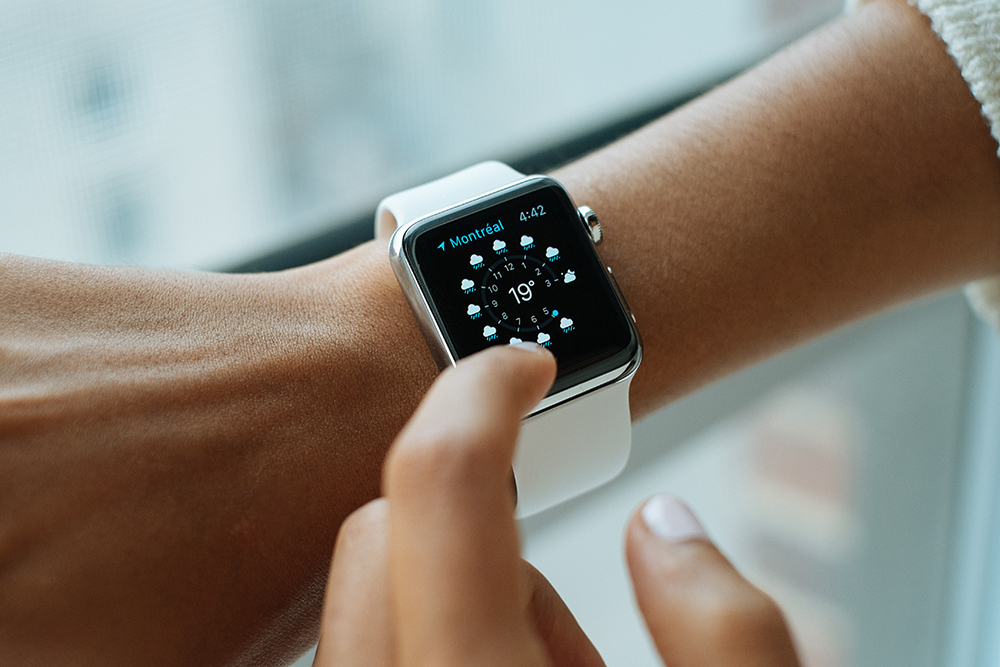
Jasmine Lu and Pedro Lopes of the University of Chicago published a paper in late 2022 describing the integration of an organism – the single-celled slime mold Physarum Polycephalum – into a wearable. From the abstract: “Researchers have been exploring how incorporating care-based interactions can change the user’s attitude & relationship towards an interactive device. This is typically achieved through virtual care where users care for digital entities. In this paper, we explore this concept further by investigating how physical care for a living organism, embedded as a functional component of an interactive device, also changes user-device relationships. Living organisms differ as they require an environment conducive to life, which in our concept, the user is responsible for providing by caring for the organism (e.g., feeding it). We instantiated our concept by engineering a smartwatch that includes a slime mold that physically conducts power to a heart rate sensor inside the device, acting as a living wire. In this smartwatch, the availability of heart-rate sensing depends on the health of the slime mold – with the user’s care, the slime mold becomes conductive and enables the sensor; conversely, without care, the slime mold dries and disables the sensor (resuming care resuscitates the slime mold).” (Lu and Lopes 2022) The paper “Integrating Living Organisms in Devices to Implement Care-based Interactions” can be downloaded here.

The CARE-MOMO in Florence

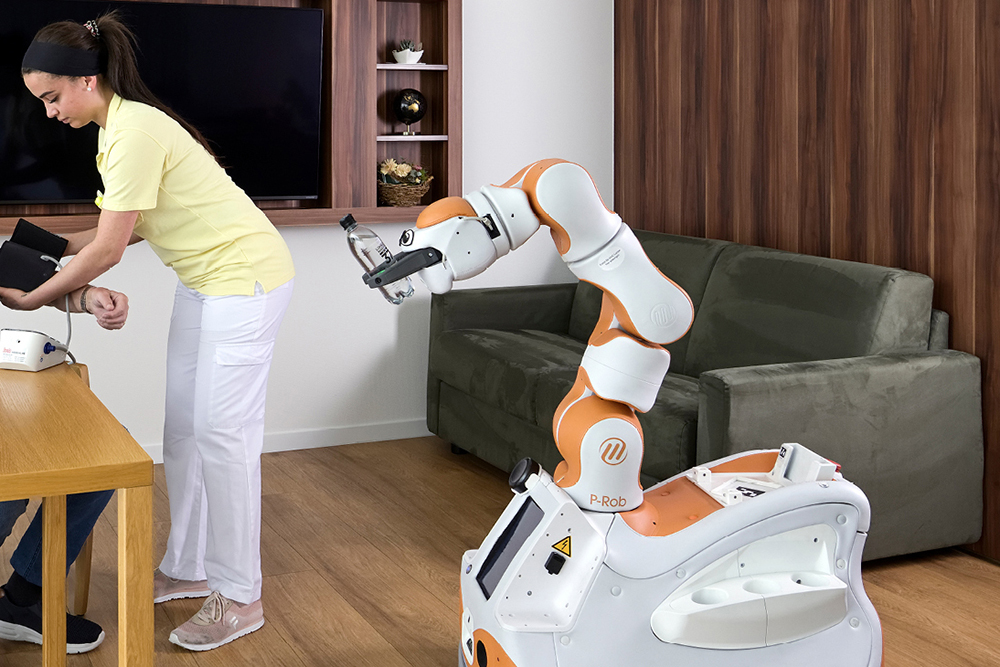
From December 13 to 16, 2022, the ICSR took place, next to Robophilosophy the most important conference on social robotics. Oliver Bendel and Marc Heimann were participating with their paper “The CARE-MOMO Project”. They presented it in a talk on the very first morning at the workshop “Robot Companionship: Applications and Challenges”. They also had a poster presentation on it on Thursday (December 15, 2022). With the help of the morality module, which includes the proven morality menu, care recipients can transfer their moral and social ideas to a care robot like Lio from F&P Robotics (Photo: F&P Robotics). The presentation was well received by the crowded room, including the Chair, who found the approach very interesting, as he pointed out several times. The workshop program can be downloaded here. More information about the conference is available at www.icsr2022.it.