UFSKW Paper-of-the-Month Award

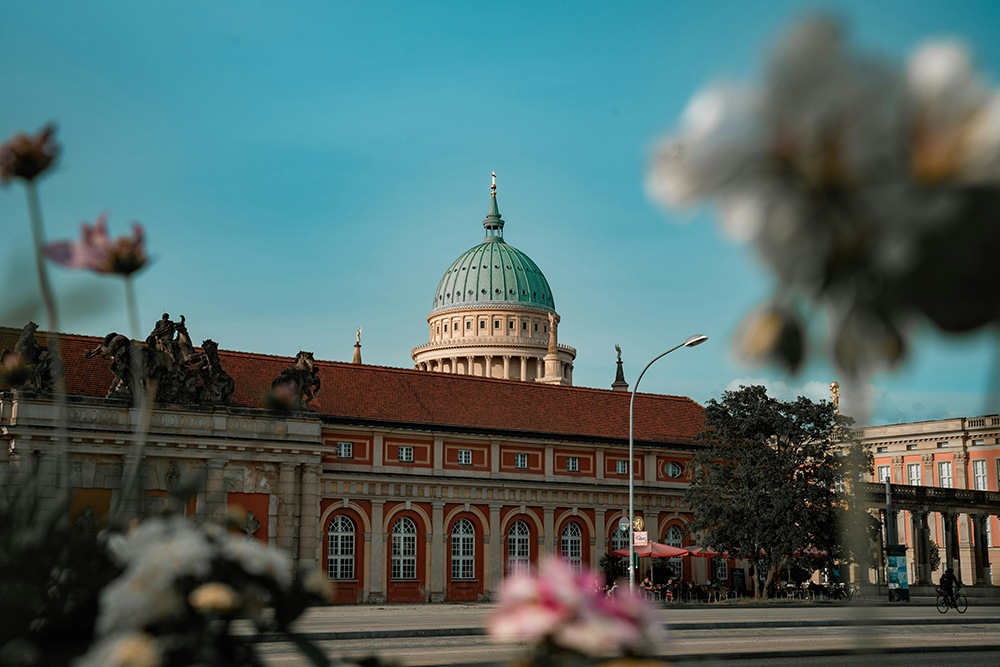
The article “‘Ick bin een Berlina’: dialect proficiency impacts a robot’s trustworthiness and competence evaluation” by Katharina Kühne, Erika Herbold, Oliver Bendel, Yuefang Zhou, and Martin H. Fischer has been granted the UFSKW Paper-of-the-Month Award for March 2024. All authors are researchers in the Potsdam Embodied Cognition Group (PECoG) at the University of Potsdam, with the exception of Oliver Bendel, who works at the FHNW School of Business and is an associated researcher in the group. “UFSKW” stands for “Universitärer Forschungsschwerpunkt Kognitionswissenschaften”. It is based at the University of Potsdam. The UFSKW Paper of the Month provides a special stage for current cognitive science research at the UFSKW. It is chosen monthly by the selection committee from all submissions. The paper says about the background of the project: “Robots are increasingly used as interaction partners with humans. Social robots are designed to follow expected behavioral norms when engaging with humans and are available with different voices and even accents. Some studies suggest that people prefer robots to speak in the user’s dialect, while others indicate a preference for different dialects.” The following results are mentioned: “We found a positive relationship between participants’ self-reported Berlin dialect proficiency and trustworthiness in the dialect-speaking robot. Only when controlled for demographic factors, there was a positive association between participants’ dialect proficiency, dialect performance and their assessment of robot’s competence for the standard German-speaking robot. Participants’ age, gender, length of residency in Berlin, and device used to respond also influenced assessments. Finally, the robot’s competence positively predicted its trustworthiness.” The article can be accessed at www.frontiersin.org/articles/10.3389/frobt.2023.1241519/full.

HeidiBOT as Host of the ESC 2025

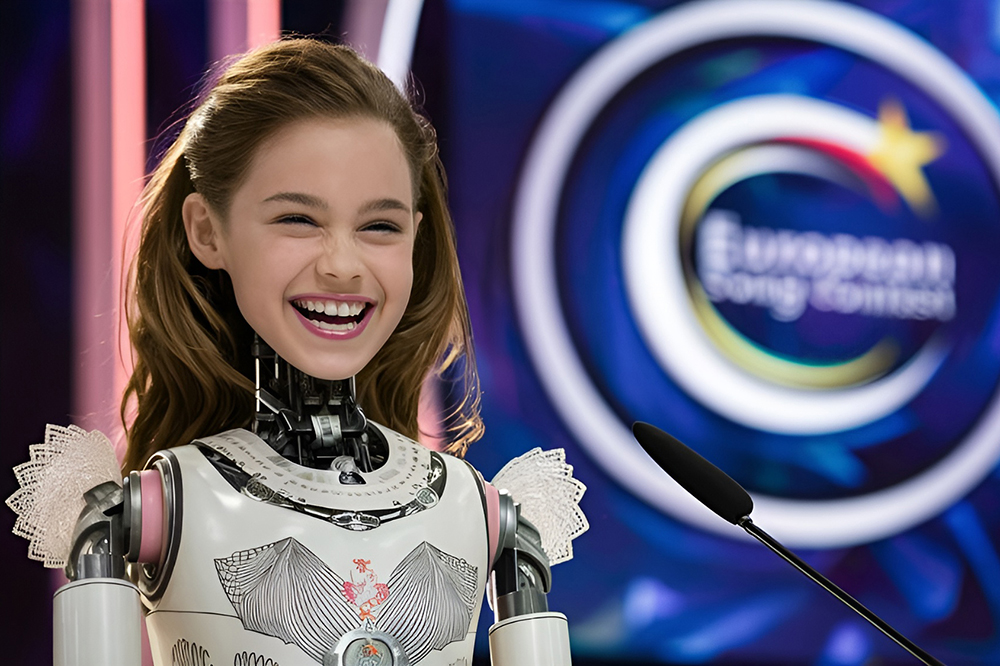
The ESC 2025 in Switzerland could be hosted by HeidiBOT, a humanoid robot connected to GPT-4o. The head could be commissioned from Hanson Robotics, RealDoll, or other companies. It would be worth considering whether a Figure 01 or similar model could serve as the basis. This would allow HeidiBOT to move naturally on stage and be part of a performance itself. Using GPT-4o or comparable language models, she would be able to speak a Swiss-German dialect, High German, English, and French. Rhaeto-Romanic should also be audible, as was the case with @llegra, a chatbot for Vallader. Switzerland could thus present itself as a country with a high level of scientific expertise, innovation, and a sense of tradition. Critics will miss the human touch and commitment. But this could be taken over more by the musicians, who are often just caricatures of themselves. They could have their say on stage and talk and discuss with the audience. A human co-host could also absorb this criticism. Another possibility would be to realize HeidiBOT as an avatar or pseudo- or quasi-hologram, similar to the ABBAtare in London. HeidiBOT could – in whatever form – look like Heidi from the booklet “AMERICAN SMILE” by Oliver Bendel. At her side would be a goat, of course. And Peterli, if he’s well-behaved (Image: Ideogram).

Adelina Can Write and Speak Basque

Conversational agents have been the subject of Prof. Dr. Oliver Bendel’s research for a quarter of a century. He dedicated his doctoral thesis at the University of St. Gallen from the end of 1999 to the end of 2022 to them – or more precisely to pedagogical agents, which would probably be called virtual learning companions today. He has been a professor at the FHNW School of Business since 2009. From 2012, he mainly developed chatbots and voice assistants in the context of machine ethics, including GOODBOT, LIEBOT, BESTBOT, and SPACE THEA. In 2022, the information systems specialist and philosopher of technology then turned his attention to dead and endangered languages. Under his supervision, Karim N’diaye developed the chatbot @ve for Latin and Dalil Jabou the chatbot @llegra for Vallader, an idiom of Rhaeto-Romanic, enhanced with voice output. He is currently testing the range of GPTs – “customized versions of ChatGPT”, as OpenAI calls them – for endangered languages such as Irish (Irish Gaelic), Maori, and Basque. According to ChatGPT, there is a relatively large amount of training material for them. On May 12, 2024 – after Irish Girl and Maori Girl – a first version of Adelina was created. The name is intended to commemorate the teacher Adelina Méndez de la Torre, who campaigned for bilingual teaching and the preservation of the Basque language. At first glance, the chatbot seems to have this under control. You can have the answers translated into English or German. Adelina is available in the GPT Store and will be further improved in the coming weeks.

When Animals Meet Machines

The manuscript of the book “Non-Human Animals, Ethics and Engineering” (alternative title “Animals, Ethics and Engineering”) was sent to the publisher Jenny Stanford in May 2024. It contains 16 chapters on this topic, including by Clara Mancini (“Animal-Centered Technology and Sustainable Development”), Fiona French (“Designing and Crafting Systems for Non-Human Animals”), and Leonie Bossert together with Thilo Hagendorff (“Animals and AI: The Role of Animals in AI Research and Application”). In “An Investigation into the Encounter Between Social Robots and Animals” (Chapter 12), Oliver Bendel “delves into the evolving landscape of social robots designed to interact with animals, dissecting the intricate dynamics of these interactions and their ethical ramifications” (Information from the editors). The philosopher of technology also presents his own projects, such as concepts and prototypes of animal-friendly machines, developed in the context of machine ethics, animal-machine interaction, and social robotics. The editors are Rosalyn W. Berne and Madeline A. Kibler from the University of Virginia. The book is scheduled for publication in late summer or fall 2024.

Maori Girl Can Speak and Write Maori

Conversational agents have been the subject of Prof. Dr. Oliver Bendel’s research for a quarter of a century. He dedicated his doctoral thesis at the University of St. Gallen from the end of 1999 to the end of 2022 to them – or more precisely to pedagogical agents, which would probably be called virtual learning companions today. He has been a professor at the FHNW School of Business since 2009. From 2012, he mainly developed chatbots and voice assistants in the context of machine ethics, including GOODBOT, LIEBOT, BESTBOT, and SPACE THEA. In 2022, the information systems specialist and philosopher of technology then turned his attention to dead and endangered languages. Under his supervision, Karim N’diaye developed the chatbot @ve for Latin and Dalil Jabou the chatbot @llegra for Vallader, an idiom of Rhaeto-Romanic, enhanced with voice output. He is currently testing the range of GPTs – “customized versions of ChatGPT”, as OpenAI calls them – for endangered languages such as Irish (Irish Gaelic), Maori, and Basque. According to ChatGPT, there is a relatively large amount of training material for them. On May 9, 2024 – one week after Irish Girl – a first version of Maori Girl was created. At first glance, it seems to have a good grasp of the Polynesian language of the indigenous people of New Zealand. You can have the answers translated into English or German. Maori Girl is available in the GPT Store and will be further improved over the next few weeks

Irish Girl Can Speak and Write Irish

Conversational agents have been the subject of Prof. Dr. Oliver Bendel’s research for a quarter of a century. He dedicated his doctoral thesis at the University of St. Gallen from the end of 1999 to the end of 2022 to them – or more precisely to pedagogical agents, which would probably be called virtual learning companions today. He has been a professor at the FHNW School of Business since 2009. From 2012, he mainly developed chatbots and voice assistants in the context of machine ethics, including GOODBOT, LIEBOT, BESTBOT, and SPACE THEA. In 2022, the information systems specialist and philosopher of technology then turned his attention to dead and endangered languages. Under his supervision, Karim N’diaye developed the chatbot @ve for Latin and Dalil Jabou the chatbot @llegra for Vallader, an idiom of Rhaeto-Romanic, enhanced with voice output. He is currently testing the range of GPTs – “customized versions of ChatGPT”, as OpenAI calls them – for endangered languages such as Irish (Irish Gaelic), Maori, and Basque. According to ChatGPT, there is a relatively large amount of training material for them. A first version of Irish Girl was created on May 3, 2024. At first glance, she seems to have a good grasp of the Goidelic language from the Celtic family. You can have the answers translated into English or German. Afterwards, you may have to ask her to switch back to Irish. Irish Girl is available in the GPT Store and will be further improved in the coming weeks.

Spot Dances in a Dog Costume

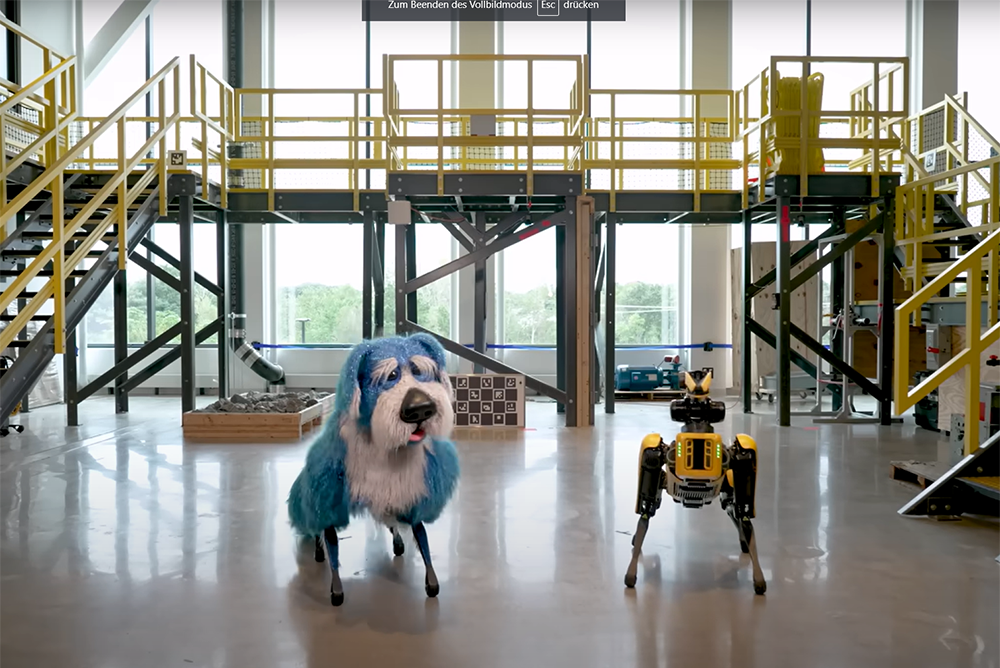
Prof. Dr. Oliver Bendel introduced the term “robot enhancement” in 2020 and has since used it in several articles and book chapters. Robot enhancement is the extension and associated modification or improvement of the robot by the user or a company, for example in functional, aesthetic, ethical or economic terms. The word was coined in reference to “human enhancement” and “animal enhancement”, and can be used to describe both the field of work and the object. One form of robot enhancement is social robot enhancement, in which a social robot is enhanced or modified and improved. An impressive example of robot enhancement is shown in a video by Boston Dynamics. A “naked” spot and a spot with a dog costume dance together in the hall where Atlas used to be seen again and again. Such robot enhancement should not necessarily be imitated by the user. There are some robots that cannot stand the costume and will heat up – to the point of becoming defective (Photo: YouTube/Boston Dynamics).

ICSR 2024 + Competition

The main conference of the ICSR will be held in Odense in 2024, and its full name is “16th International Conference on Social Robotics +AI”. There is also the ICSR-2024 Competition in Naples, Italy. According to the website, it is “The 1st Competition of the International Conference on Social Robotics”. The new format will take place on 8-9 May 2024. The General Chair explains the intention of the event: “ICSR Competition aims at being not only a competition but an extraordinary showcase of innovation and talent in the field of robotics. This event marks the convergence of brilliance, where teams comprising students, PhD students, researchers, and esteemed professors will compete in a series of captivating competitions through a groundbreaking exploration into the realms of robotics, where cutting-edge technologies and social applications come together. In the spirit of fostering collaboration and pushing the boundaries of what is possible, our competitions will showcase the diverse capabilities of robotics.” (Website ICSR-24 Competition) According to the organizers, teams will compete in four different competitions: the Robotic Arm Challenge, the Humanoid Robot Challenge, the Robot Design Challenge, and the Game Jam Challenge. More information is available at www.icsr2024-competition.org.

Creative Robotics Theatre

ACM Designing Interactive Systems 2024 (DIS 2024) will be held from 1-5 July 2024 at IT University, Copenhagen, Denmark. The Call for Papers for the Creative Robotics Theatre workshop is open to workshop papers, videos, pictorials, design explorations and performances. The roboticist and artist Hooman Samani is one of the organizers. He calls for participation on his website: “Join us at DIS 2024 for an innovative workshop exploring the confluence of robotics, theatre, and societal change. We are seeking artists, technologists, researchers, and practitioners interested in pushing the boundaries of Creative Robotics Theatre to enhance societal well-being and address global challenges.” (Website Hooman Samani) Topics of interest include creative robotics theatre, robotics performance, embodied and tangible interfaces and performances, and performance with embodied objects. The deadline for submissions is 15 May 2024. Further information on the workshop is available at hoomansamani.com.

ICSR + BioMed 2024

In addition to the ICSR in Odense, which focuses on social robotics and artificial intelligence, there is also the ICSR in Naples this year, which organizes a robot competition. In addition, an ICSR conference focusing on biomedicine and the healthcare sector will take place in Singapore from August 16-18, 2024. The website states: “The 16th International Conference on Social Robotics + BioMed (ICSR + BioMed 2024) focuses on interdisciplinary innovation on Bio-inspired, Biomedical, and Surgical Robotics. By fostering the much-needed merging of these disciplines, together with fast emerging Biotech, the conference aims to ensure the lesson learned from these communities blend to unleash the real potential of robots. … The conference will serve as the scientific, technical, and business platform for fostering collaboration, exploration, and advancement in these cutting-edge fields. It will showcase the latest breakthroughs and methodologies, shaping the future of robotics design and applications across several sectors including Biomedical and healthcare.” (Website ICSR) Papers must be submitted by June 5, 2024. Further information on the conference is available at robicon2024.org.