25 Artifacts and Concepts of ME and SR

Since 2012, on the initiative of Oliver Bendel, 25 concepts and artifacts of machine ethics and social robotics have been created to illustrate an idea or make its implementation clear. These include conversational agents such as GOODBOT, LIEBOT, BESTBOT, and SPACE THEA, which have been presented at conferences, in journals and in the media, and animal-friendly machines such as LADYBIRD and HAPPY HEDGEHOG, which have been covered in books such as “Die Grundfragen der Maschinenethik” by Catrin Misselhorn and on Indian, Chinese and American platforms. Most recently, two chatbots were created for a dead and an endangered language, namely @ve (for Latin) and @llegra (for Vallader, an idiom of Rhaeto-Romanic). The CAIBOT project will be continued in 2024. In this project, a language model is to be transformed into a moral machine with the help of prompt engineering or fine-tuning, following the example of Claude von Anthropic. In the “The Animal Whisperer” project, an app is to be developed that understands the body language of selected animals and also assesses their environment with the aim of providing advice on how to treat them. In the field of machine ethics, Oliver Bendel and his changing teams are probably among the most active groups worldwide.

AAAI Spring Symposia Return to their Roots

The AAAI Spring Symposium Series will be held at Stanford University on March 25-27, 2024. The symposium co-chairs are Christopher Geib (SIFT, USA) and Ron Petrick (Heriot-Watt University, UK). Since 2019, the Association for the Advancement of Artificial Intelligence has not published the proceedings itself, but left this to the organizers of the individual symposia. This had unfortunate consequences. For example, some organizers did not publish the proceedings at all, and the scientists did not know this in advance. This, in turn, had consequences for the funding of travel and fees, since many universities will only pay for their members to attend conferences if they are linked to a publication. This major flaw, which damaged the prestigious conference, was fixed in 2024. As of this year, AAAI once again offers centralized publication, along with an excellent quality assurance process. Over the past ten years, the AAAI Spring Symposia have been relevant not only to classical AI, but also to roboethics and machine ethics. Groundbreaking symposia were, for example, “Ethical and Moral Considerations in Non-Human Agents” in 2016, “AI for Social Good” in 2017, or “AI and Society: Ethics, Safety and Trustworthiness in Intelligent Agents” in 2018. In 2024, you can look forward to the “Impact of GenAI on Social and Individual Well-being” symposium, which will focus on an app for the blind and GPTs as virtual learning companions (VLCs), among other things. More information is available at aaai.org/conference/spring-symposia/sss24/ (Image: DALL-E 3).

We Need Robot Parks in Europe

In his talk “Ethische Dimensionen von Robotik in der Pflege” (“Ethical dimensions of robotics in care”) at the Federal Ministry of Health (BMG) on December 8, 2020, Prof. Dr. Oliver Bendel made the case for robot parks where people can encounter real robots. “You can also set up specific parks with robots in the care sector. Mind-controlled wheelchairs, exoskeletons, high-tech prostheses, etc. could also have their place there.” (own translation) In the 2021 study “Roboter, Empathie und Emotionen” (“Robots, empathy, and emotions”), the technology philosopher takes this idea further for Switzerland: “In order to bring people closer to machines and enable a critical assessment, direct contact should be promoted, for example with the help of robot parks.” There is also a need for “relevant further training for (non-specialist) scientists, journalists and politicians, whereby robot parks could also be used here” (“Roboter, Empathie und Emotionen”, own translation). In 2024, dozens of four-legged and two-legged robots as well as numerous other social robots and service robots will be available. Even advanced models will be affordable from 1000 to 2000 dollars. The time is ripe for robot parks, whether in Switzerland or Germany or anywhere else in Europe (Image: DALL-E 3).

Is it time for NAO II and Pepper II?

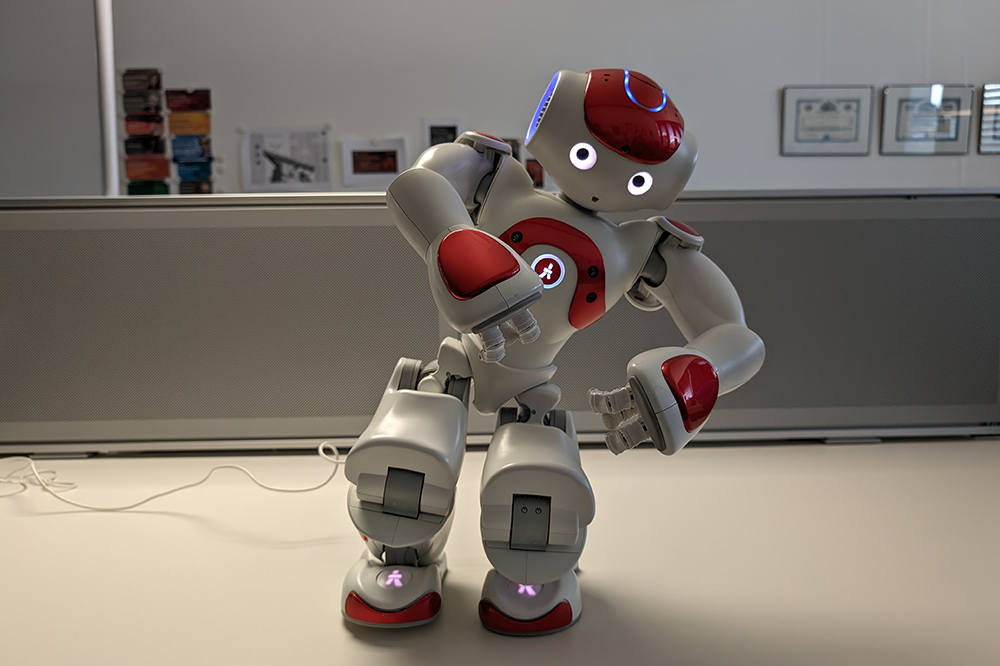
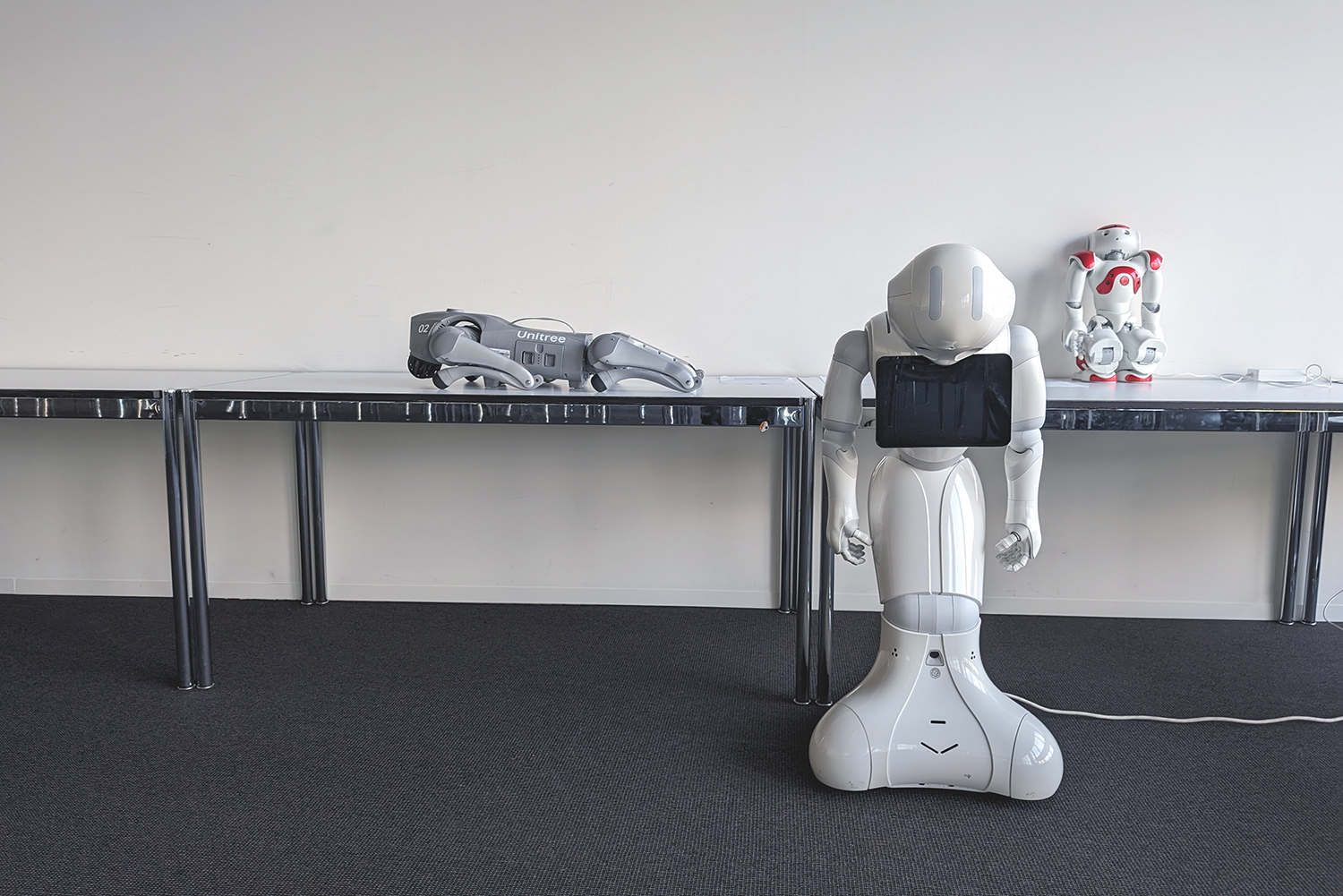
NAO and Pepper from Aldebaran – part of the United Robotics Group – are flagships of social robotics. The smaller one saw the light of day in 2006 (in the meantime version 6 is available), the larger one in 2014, and they are both adored at university events such as Prof. Dr. Oliver Bendel’s elective modules on social robotics at the FHNW or in companies. Everyone appreciates the cartoonish design and natural language skills. And they laugh their heads off when they stroke Pepper and it says it feels like a cat. For some time now, there have been robots with two separate displays for the eyes, such as Alpha Mini, or with a display for the mouth, such as Navel. Unitree Go2 and Unitree H1 have amazing mobility. The community is asking when NAO II and Pepper II will be released, not as new versions but as new models. However, it’s a bit like the VW Beetle. It is very demanding to reissue a classic, and old fans are quickly disappointed, as the New Beetle and Beetle II have shown. NAO II and Pepper II should also have two separate displays for their eyes. The Navel displays, which have a three-dimensional effect, can be used as a model. For Pepper, displays for the mouth and cheeks could also be considered. This would allow it to display facial expressions and blush when you pay it a compliment. Or it would smile when you stroked it. The bodies would also need a general overhaul. Both social robots should – Cozmo is a role model here – look alive at all times. And both should at least be able to grasp and hold something, like a Unitree H1. At the same time, both should be instantly recognizable. VW has probably learned from the reactions of disappointed fans. Perhaps the companies should sit down together. And bring a Beetle III, a NAO II, and a Pepper II onto the market in 2025.

The Animal Whisperer

When humans come into contact with wildlife, farm animals, and pets, they sometimes run the risk of being injured or killed. They may be attacked by bears, wolves, cows, horses, or dogs. Experts can use an animal’s body language to determine whether or not danger is imminent. Context is also important, such as whether a mother cow is with her calves. The multimodality of large language models enables novel applications. For example, ChatGPT can evaluate images. This ability can be used to interpret the body language of animals, thus using and replacing expert knowledge. Prof. Dr. Oliver Bendel, who has been involved with animal-computer interaction and animal-machine interaction for many years, has initiated a project called “The Animal Whisperer” in this context. The goal is to create a prototype application based on GenAI that can be used to interpret the body language of an animal and avert danger for humans. GPT-4 or an open source language model should be used to create the prototype. It should be augmented with appropriate material, taking into account animals such as bears, wolves, cows, horses, and dogs. Approaches may include fine-tuning or rapid engineering. The project will begin in March 2024 and the results will be available in the summer of the same year (Image: DALL-E 3).

Goodbye Apple Car, Hello GenAI

Apple’s ambitions to enter the automotive business are apparently history. This is reported by Bloomberg. “Apple Inc. is canceling a decadelong effort to build an electric car, according to people with knowledge of the matter, abandoning one of the most ambitious projects in the history of the company.” (Bloomberg, 27 February 2024) Numerous media outlets around the world have picked up the story. The company actually wanted to launch an autonomous electric car on the market. Apple never communicated this publicly, but it was common knowledge. The project as part of the Special Projects Group (SPG) is now to be wound up and the remaining employees are to focus on the area of generative AI in future, where Apple wants to catch up in the coming months. So you could say: goodbye Apple car, hello GenAI.

Start of the European AI Office

The European AI Office was established in February 2024. The European Commission’s website states: “The European AI Office will be the center of AI expertise across the EU. It will play a key role in implementing the AI Act – especially for general-purpose AI – foster the development and use of trustworthy AI, and international cooperation.” (European Commission, February 22, 2024) And further: “The European AI Office will support the development and use of trustworthy AI, while protecting against AI risks. The AI Office was established within the European Commission as the center of AI expertise and forms the foundation for a single European AI governance system.” (European Commission, February 22, 2024) According to the EU, it wants to ensure that AI is safe and trustworthy. The AI Act is the world’s first comprehensive legal framework for AI that guarantees the health, safety and fundamental rights of people and provides legal certainty for companies in the 27 member states.

Saving Languages with Language Models

On February 19, 2024, the article “@llegra: a chatbot for Vallader” by Oliver Bendel and Dalil Jabou was published in the International Journal of Information Technology. From the abstract: “Extinct and endangered languages have been preserved primarily through audio conservation and the collection and digitization of scripts and have been promoted through targeted language acquisition efforts. Another possibility would be to build conversational agents like chatbots or voice assistants that can master these languages. This would provide an artificial, active conversational partner which has knowledge of the vocabulary and grammar and allows one to learn with it in a different way. The chatbot, @llegra, with which one can communicate in the Rhaeto-Romanic idiom Vallader was developed in 2023 based on GPT-4. It can process and output text and has voice output. It was additionally equipped with a manually created knowledge base. After laying the conceptual groundwork, this paper presents the preparation and implementation of the project. In addition, it summarizes the tests that native speakers conducted with the chatbot. A critical discussion elaborates advantages and disadvantages. @llegra could be a new tool for teaching and learning Vallader in a memorable and entertaining way through dialog. It not only masters the idiom, but also has extensive knowledge about the Lower Engadine, that is, the area where Vallader is spoken. In conclusion, it is argued that conversational agents are an innovative approach to promoting and preserving languages.” Oliver Bendel has been increasingly focusing on dead, extinct and endangered languages for some time. He believes that conversational agents can help to strengthen and save them.

Bao in Switzerland

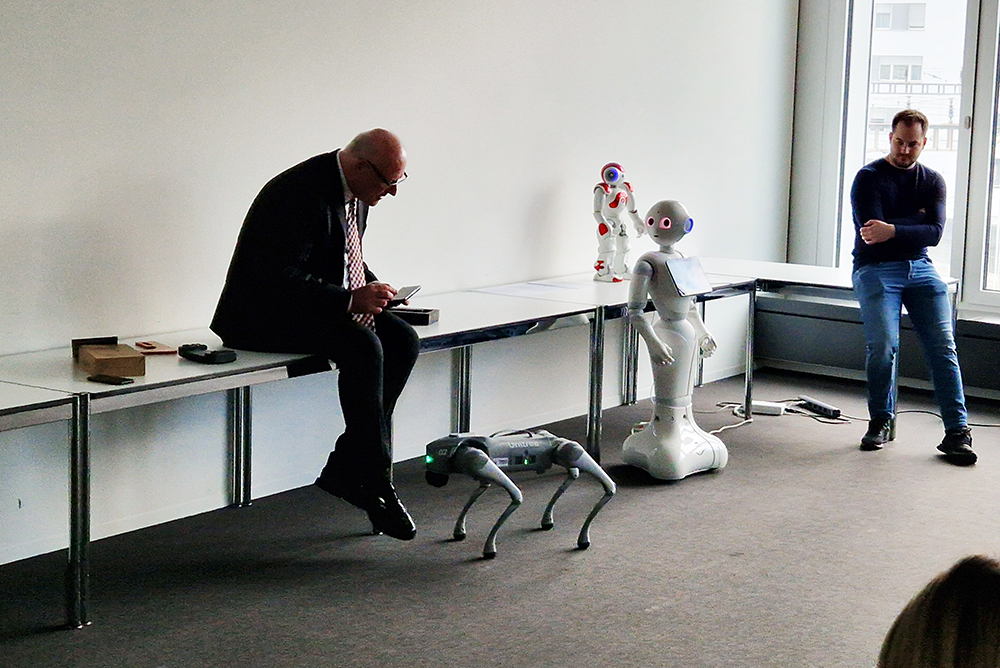
From February 15 to 17, 2024, the elective module “Social Robots from a Technical, Economic and Ethical Perspective” by Prof. Dr. Oliver Bendel took place at the FHNW School of Business in Brugg-Windisch. This was the sixth time the course had been held and the first time it had taken place on this campus. The participants were mainly prospective business economists. A GPT called Social Robotics Girl, which is specialized in the topic, was available. A presentation by Claude Toussaint from Navel Robotics enriched the event. He spoke not only about the development of the model, but also about the financing of the company. Among the robots at the demo was Unitree Go2. It comes from the Social Robots Lab (SRL) privately funded by Oliver Bendel and is called Bao (Chinese for “treasure, jewel”) by him. The SRL also includes Alpha Mini, Cozmo, and Hugvie – and the voice-controlled Vector, which was not used in the lessons. When designing their own social robots, the students worked with image generators, this time mainly with DALL-E 3.

Generative AI for the Blind

The paper “How Can Generative AI Enhance the Well-being of the Blind?” by Oliver Bendel is now available as a preprint at arxiv.org/abs/2402.07919. It was accepted at the AAAI 2024 Spring Symposium “Impact of GenAI on Social and Individual Well-being”. From the abstract: “This paper examines the question of how generative AI can improve the well-being of blind or visually impaired people. It refers to a current example, the Be My Eyes app, in which the Be My AI feature was integrated in 2023, which is based on GPT-4 from OpenAI. The author’s tests are described and evaluated. There is also an ethical and social discussion. The power of the tool, which can analyze still images in an amazing way, is demonstrated. Those affected gain a new independence and a new perception of their environment. At the same time, they are dependent on the world view and morality of the provider or developer, who prescribe or deny them certain descriptions. An outlook makes it clear that the analysis of moving images will mean a further leap forward. It is fair to say that generative AI can fundamentally improve the well-being of blind and visually impaired people and will change it in various ways.” Oliver Bendel will present the paper at Stanford University on March 25-27. It is his ninth consecutive appearance at the AAAI Spring Symposia, which this time consists of eight symposia on artificial intelligence.