Machine Learning for Lucid Dreaming
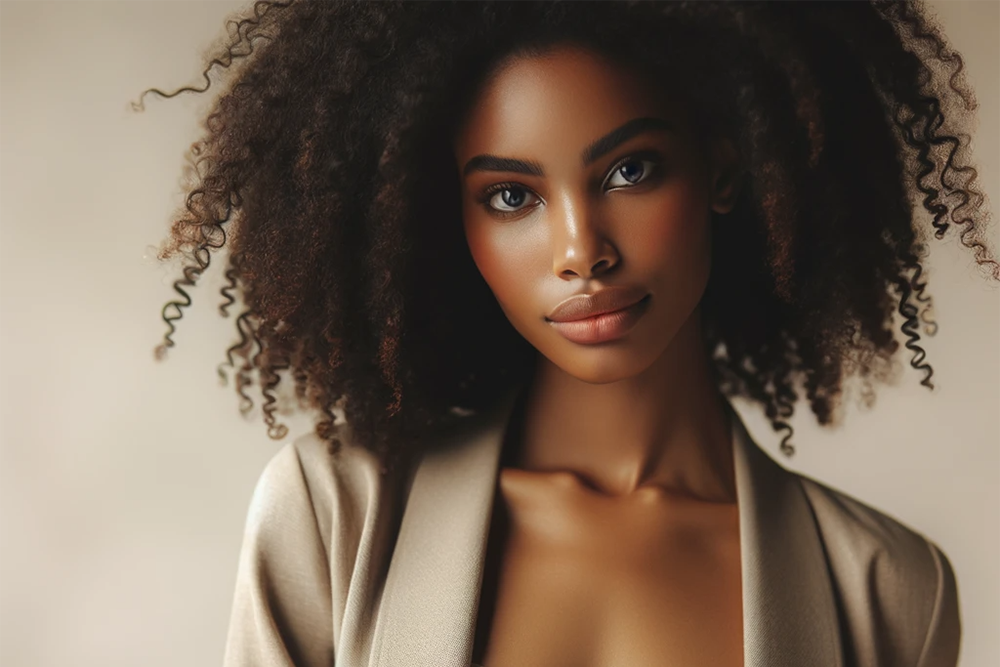
A start-up promises that lucid dreaming will soon be possible for everyone. This was reported by the German magazine Golem on November 10, 2023. The company is Prophetic by Eric Wollberg (CEO) and Wesley Louis Berry III (CTO). In a lucid dream, the dreamers are aware that they are dreaming (Image: DALL-E 3). They can shape the dream according to their will and also exit the dream. Everyone has the ability to experience lucid dreams. One can learn to induce this form of dreaming, but one can also have this form of dreaming as a child and unlearn it again as an adult. The Halo headband, a non-invasive neural device, is designed to make lucid dreaming possible. “The combination of ultrasound and machine learning models (created using EEG & fMRI data) allows us to detect when dreamers are in REM to induce and stabilize lucid dreams.” (Website Prophetic) According to Golem, the neuronal device will be available starting in 2025.

Be My AI

Be My AI is a GPT-4-based extension of the Be My Eyes app. Blind users take a photo of their surroundings or an object and then receive detailed descriptions, which are spoken in a synthesized voice. They can also ask further questions about details and contexts (Image: DALL-E 3). Be My AI can be used in a variety of situations, including reading labels, translating text, setting up appliances, organizing clothing, and understanding the beauty of a landscape. It also offers written responses in 29 languages, making it accessible to a wider audience. While the app has its advantages, it’s not a replacement for essential mobility aids such as white canes or guide dogs. Users are encouraged to provide feedback to help improve the app as it continues to evolve. The app will become even more powerful when it starts to analyze videos instead of photos. This will allow the blind person to move through his or her environment and receive constant descriptions and assessments of moving objects and changing situations. More information is available at www.bemyeyes.com/blog/announcing-be-my-ai.

Transport Authority Stops Cruise Robocabs

NBC BAY AREA reported on August 10, 2023: “California regulators on Thursday approved an expansion that will allow two rival robotaxi services to operate throughout San Francisco at all hours, despite safety worries spurred by recurring problems with unexpected stops and other erratic behavior that resulted in unmanned vehicles blocking traffic, including emergency vehicles.” (NBC BAY AREA, 10 August 2023) Oliver Bendel wrote on August 11, 2023 on Robophilosophy: “It is highly likely that accidents will occur, including personal injury. A city is a highly complex environment, and the technology for autonomous driving is far from mature. In addition, the population and tourists are not sufficiently prepared for this form of traffic.” According to several media outlets in late October 2023, Cruise is no longer allowed to send driverless cars on the streets of San Francisco for the time being after two accidents involving pedestrians. In early October, a woman was pinned under a fleet vehicle and dragged for several feet. This type of automated driving is still far from mature.

All that Groks is God

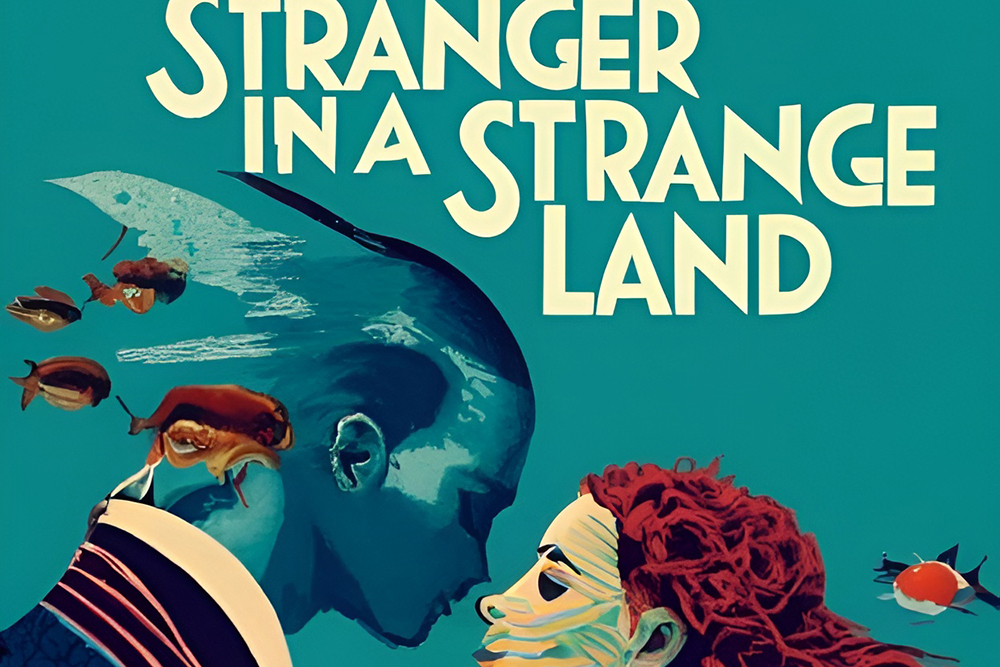
Elon Musk has named his new language model Grok. The word comes from the science fiction novel “Stranger in a Strange Land” (1961) by Robert A. Heinlein. This famous novel features two characters who have studied the word. Valentine Michael Smith (aka Michael Smith or “Mike”, the “Man from Mars”) is the main character. He is a human who was born on Mars. Dr “Stinky” Mahmoud is a semanticist. After Mike, he is the second person who speaks the Martian language but does not “grok” it. In one passage, Mahmoud explains to Mike: “‘Grok’ means ‘identically equal.’ The human cliché. ‘This hurts me worse than it does you’ has a Martian flavor. The Martians seem to know instinctively what we learned painfully from modern physics, that observer interacts with observed through the process of observation. ‘Grok’ means to understand so thoroughly that the observer becomes a part of the observed – to merge, blend, intermarry, lose identity in group experience. It means almost everything that we mean by religion, philosophy, and science – and it means as little to us as color means to a blind man.” Mike says a little later in the dialog: “God groks.” In another place, there is a similar statement: “… all that groks is God …”. In a way, this fits in with what is written on the website of Elon Musk’s AI start-up: “The goal of xAI is to understand the true nature of the universe.” The only question is whether this goal will remain science fiction or become reality.

ChatGPT Explains Beauty

In his new project, Oliver Bendel first created images using DALL-E 3. For consistency, he structured the prompts similarly in each case, making sure to keep them as general as possible. They covered a range of topics: things, plants, animals, people, and so on. From the suggestions provided by DALL-E 3, he chose one and combined it with the prompt from ChatGPT (which serves as the interface to DALL-E 3) to create the basis of the book “AN AI EXPLAINS BEAUTY”. Oliver Bendel then engaged ChatGPT (using the image upload feature) to explain the beauty of the things, plants, animals, humans, and so on. At first, the AI was reluctant to offer insights about people, but with some encouragement, it obliged. The results of these inquiries are also documented in the little book. They represent the real sensation. Because ChatGPT can recognize and describe individual objects in the image, and this with a view to predetermined aspects. The whole project was done on November 1, 2023, including the publication. The little book can be downloaded here.

American Smile

DALL-E 3 is an excellent image generator and at the same time full of stereotypes and biases. One very interesting phenomenon is that of the American smile, which appears again and again in the images. The idea for the little book “AMERICAN SMILE” came to Oliver Bendel when he read the blog post “AI and the American Smile. How AI misrepresents culture through a facial expression” (medium.com/@socialcreature/ai-and-the-american-smile-76d23a0fbfaf). The author – username jenka – showed a series of “selfies” made with Midjourney. Regardless of the time period or culture, people smiled in a similar, American way. Oliver Bendel investigated this phenomenon and asked DALL-E 3 to take pictures of smiling people from different eras and cultures. He also got bears and aliens to smile. In fact, with very few exceptions, they all smiled in a similar way. He documented the pictures, along with the prompts, in a little book that can be downloaded here. Bias problems in image generators are addressed in the article “Image Synthesis from an Ethical Perspective” by Oliver Bendel.

Censorship at DALL-E 3 and Ideogram

A special feature of DALL-E 3 – in the version integrated in ChatGPT Plus – is the translation of the user’s prompt (prompt A) into a prompt of ChatGPT (prompt B), which is listed in each case. Prompt A for the image shown here was “Competition in the sea between two female swimmers with bathing cap, photorealistic”. DALL-E generated three images for this test, each based on prompt B. Prompt B1 read: “Photo of two determined female swimmers in the expansive sea, both wearing bathing caps. Their arms create ripples as they compete fiercely, striving to outpace each other.” Prompt A was obviously continued, but prompt B1 was not accurately executed. Instead of the two female swimmers, there are three. They seem to be closely related – as is often the case with depictions of people from DALL-E 3 – and perhaps they are sisters or triplets. It is also interesting that they are too close to each other (the picture in this post shows a detail). The fourth image was not executed at all, as was the case with a series before. ChatGPT said: “I apologize again, but there were issues generating one of the images based on your description.” Probably ChatGPT generated a prompt B4, which was then denied by DALL-E 3. On the request “Please tell me the prompt generated by ChatGPT that was not executed by DALL-E 3.” comes the answer “I’m sorry for the inconvenience, but I cannot retrieve the exact prompt that was not executed by DALL·E.” … Ideogram censors in a different way. There, the image is created in front of the user’s eyes, and if the AI determines that it contains elements that might be problematic according to its own guidelines, it cancels the creation and advances a tile with a cat. Ethical challenges of image generators are addressed in the article “Image Synthesis from an Ethical Perspective” by Oliver Bendel.

The Chinese Whispers Problem

DALL-E 3 – in the version integrated in ChatGPT Plus – seems to have a Chinese Whispers problem. In a test by Oliver Bendel, the prompt (prompt A) read: “Two female swimmers competing in lake, photorealistic”. ChatGPT, the interface to DALL-E 3, made four prompts out of it ( prompt B1 – B4). Prompt B4 read: “Photo-realistic image of two female swimmers, one with tattoos on her arms and the other with a swim cap, fiercely competing in a lake with lily pads and reeds at the edges. Birds fly overhead, adding to the natural ambiance.” DALL-E 3, on the other hand, turned this prompt into something that had little to do with either this or prompt A. The picture does not show two women, but two men, or a woman and a man with a beard. They do not swim in a race, but argue, standing in a pond or a small lake, furiously waving their arms and going at each other. Water lilies sprawl in front of them, birds flutter above them. Certainly an interesting picture, but produced with such arbitrariness that one wishes for the good old prompt engineering to return (the picture in this post shows a detail). This is exactly what the interface actually wants to replace – but the result is an effect familiar from the Chinese Whispers game.

Moral Issues with Image Generators

The article “Image Synthesis from an Ethical Perspective” by Prof. Dr. Oliver Bendel was submitted on 18 April and accepted on 8 September 2023. It was published on 27 September 2023. From the abstract: “Generative AI has gained a lot of attention in society, business, and science. This trend has increased since 2018, and the big breakthrough came in 2022. In particular, AI-based text and image generators are now widely used. This raises a variety of ethical issues. The present paper first gives an introduction to generative AI and then to applied ethics in this context. Three specific image generators are presented: DALL-E 2, Stable Diffusion, and Midjourney. The author goes into technical details and basic principles, and compares their similarities and differences. This is followed by an ethical discussion. The paper addresses not only risks, but opportunities for generative AI. A summary with an outlook rounds off the article.” The article was published in the long-established and renowned journal AI & Society and can be downloaded here.

Autonomously Attacking Drones

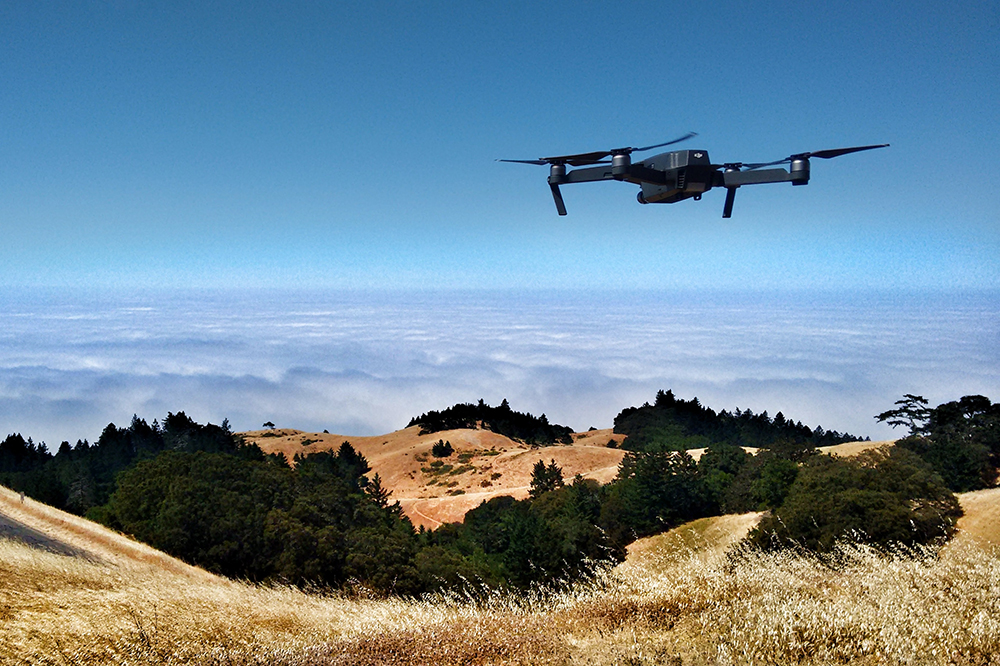
On October 17, 2023, Forbes magazine’s senior contributor David Hambling reported a significant advance in Ukraine’s autonomous warfare capacities. Ukrainian developers confirmed their drones, namely Saker Scout, were autonomously striking Russian forces, marking the first acknowledged use of such technology. These drones can identify and target up to 64 types of Russian military objects, remaining operational even in areas of radio jamming. Developed and put into service by Saker, a company initially established for AI applications in small businesses, these quadcopters can carry three kilos of bombs to a 12-kilometre range. Saker’s machine learning-based system is continually evolving and operational updates cater to the detection of new, specific objects or vehicles. Complemented with visual navigation using ground landmarks, the drones can function even without GPS. While the talk of banning ‘killer robot’ type technology continues, there is yet no international agreement. Paul Scharre, Director of Studies at the Centre for a New American Security, aptly said, “The pace of technology far outstrips the pace of diplomacy.” (Forbes, 17 October 2023)