@llegra, a Chatbot for Vallader
Conversational agents have been a research subject of Prof. Dr. Oliver Bendel for a quarter of a century. He dedicated his doctoral thesis at the University of St. Gallen to them. At the School of Business FHNW, he developed them with his changing teams from 2012 to 2022, primarily in the context of machine ethics and social robotics. The philosopher of technology now devotes himself increasingly to dead, extinct, and endangered languages. After @ve (2022), a chatbot for Latin based on GPT-3, another project started in March 2023. The chatbot @llegra is developed by Dalil Jabou for the Rhaeto-Romanic idiom Vallader, which occurs in the Lower Engadine between Martina in the northeast and Zernez in the southwest, as well as in Val Müstair. The user can type text and gets text output. In addition, @llegra speaks with the help of a text-to-speech system from the company SlowSoft, which supports the project. The GPT-3 speech model produced rather unsatisfactory results. The breakthrough then came with the use of GPT-4. The knowledge base was supplemented with the help of four children’s books on Vallader. The project will be completed in August 2023. The results will be published thereafter.

Social Features for Industrial Robots

For years there has been a trend to add social features to service robots, such as delivery, security and cleaning robots, and also to industrial robots, resulting in cobots. They do not usually become fully social robots, but they benefit from having eyes and mouths or making sounds – or from being able to get very close to people without hurting or hindering them. Amazon is riding this wave with its Proteus transport robot. It can be found in a huge department store in Reading, Massachusetts. A Wired editor writes about his first encounter with two Proteus models: “Their round eyes and satisfied grins are rendered with light emitting diodes. They sport small lidar sensors like tiny hats that scan nearby objects and people in 3D. Suddenly, one of them plays a chipper little tune, its mouth starts flashing, and its eyes morph into heart shapes. This means, I am told, that the robot is happy.” (Wired, 26 June 2023) “Why would a robot be happy?”, asks the editor Sophie Li, a software engineer at Amazon. She explains that being able to express happiness can help Proteus work more effectively around people. “Proteus carries suitcase-sized plastic bins filled with packages over to trucks in a loading bay that is also staffed by humans. The robot is smart enough to distinguish people from inanimate objects and make its own decisions about how to navigate around a box or person in its path. But sometimes it needs to tell someone to move out of the way – or that it is stuck, which it does by showing different colors with its mouth. Li recently added the heart eyes to let Proteus also signal when it has completed a task as planned.” (Wired, 26 June 2023) The market for real social robots is still in its infancy. Care and therapy robots, entertainment and toy robots, or sex robots – there is a constant up and down, with companies emerging and disappearing, products appearing and disappearing. It is uncertain whether all social robots will be needed. What is certain is that social features will help to improve modern industrial robots and classic service robots.

AI-based Robots for the Disposal of Discarded Ammunition

The Robotics Innovation Center (RIC) at the German Research Centre for Artificial Intelligence (DFKI) in Bremen wants to clear the seabed of discarded ammunition in the North Sea and Baltic Sea. This was reported by the online magazine Golem on 14 June 2023. The researchers are using the autonomous underwater vehicle Cuttlefish, developed at DFKI, as a test platform. According to Golem, the robot has been equipped with two deep-sea-capable gripper systems. These are designed to enable flexible handling of objects under water, even difficult objects such as explosive devices. The AI-based control system allows the robot to change its buoyancy and centre of gravity during the dive. According to the online magazine, the AUV is equipped with numerous sensors such as cameras, sonars, laser scanners, and magnetometers. This is how it is supposed to approach an object without colliding with it. The system will certainly be effective – whether it is efficient remains to be seen.

ADAM the Bartender

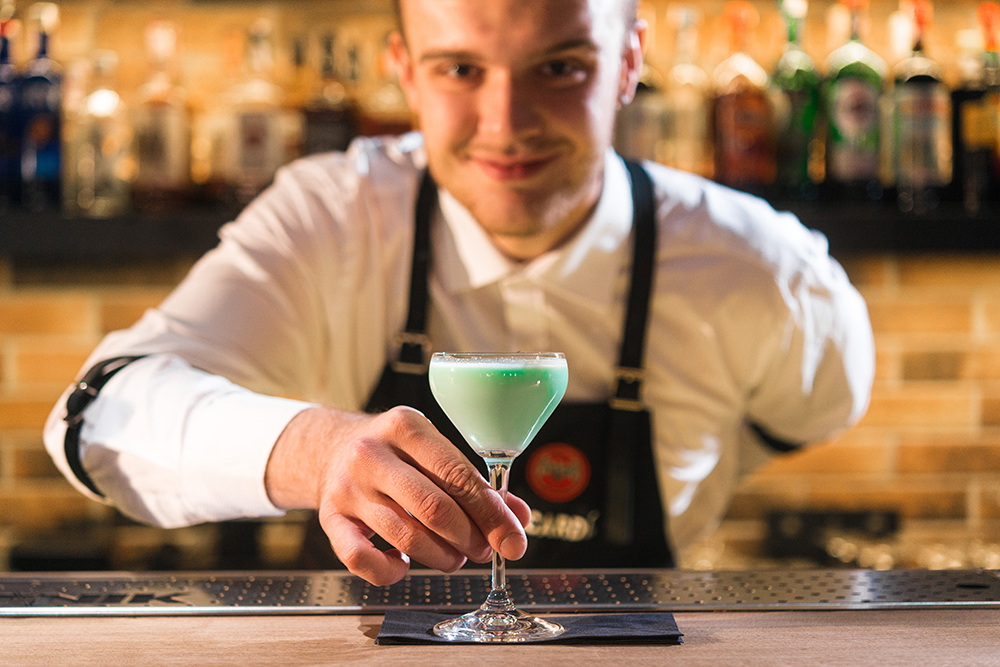
Bar robots are mostly cobots, housed in a kiosk or behind the counter. They prepare coffee, as barista robots, or cocktails, as cocktail robots. Daily Mail Online reported on May 11, 2023: “New York City’s first coffee shop run by robot baristas is coming to Greenpoint, where a two-armed robot called ADAM will serve up potentially hundreds and hundreds of cups of coffee a day at Botbar.” (Daily Mail Online, 11 May 2023) Two-armed bar robots are the exception so far. One of them is Toni from Makr Shakr. It accesses 158 different bottles hanging from the ceiling of the open bar and shakes and stirs the liquids. ADAM looks like an egg with a head. It has two extra-long arms with many degrees of freedom. “Beyond coffee-making, ADAM will have several other skills, including dancing for and waving at customers. The technological feat can produce up to 50 espresso drinks per hour. The new neighbor-hood haunt will also serve food.” (Daily Mail Online, 11 May 2023) One of the few researchers investigating bar robots and other robots in the hospitality industry is Oliver Bendel. Together with Lea Peier, he presented the paper “How Can Bar Robots Enhance the Well-being of Guests?” at the AAAI 2023 Spring Symposia in San Francisco. A preprint is available here.

The Rise of the Humanoid Robots

If a report in Wired is to be believed, humanoid robotics has entered a decisive phase. The editor describes the case of Figure AI. This company from Sunnyvale, CA is building a humanoid robot for warehouse work and recently announced $70 million in investment funding. Chief Technology Officer Jerry Pratt is one of the key figures. “Pratt says his company’s robot is taking its first steps around a mocked-up warehouse in Sunnyvale, California. Brett Adcock, Figure’s CEO, reckons it should be possible to build humanoids at the same cost of making a car, providing there is enough demand to ramp up production.” (Wired, 25 May 2023) According to Wired, Figure AI is not the only company betting that humanoid robots are maturing. “Others include 1X, Apptronik, and Tesla.” (Wired, 25 May 2023) Tesla’s Optimus recently made an appearance on stage that was much more convincing than the first. By the way, it looks similar to the Figure AI model. Improvements in the robots can be seen in motor skills, but also in perception and control. Language models like PaLM-E could play an important role here in the future.

A New Version of Optimus

Tesla has so far caused more amazement than admiration among roboticists. Now the company has unveiled a revised version of its Optimus humanoid robot. It is said to have more capabilities than its predecessor. A video released by Tesla shows five of the robots in action. As an editor of the German magazine Golem points out, the robots walk much more safely than before and are also capable of sensitive interactions. The progress is attributed to improvements in the actuators and to human assistance. The design is still likely to put off many users. In particular, the head without a face will take some getting used to. But perhaps the eyes and mouth, including facial expressions, will be digitally implemented later. You can watch the video here.

Robots in Hawai’i – Part 8

Hawaiian Host is the largest manufacturer of chocolate-covered macadamias in the world, with millions of boxes of the treats distributed around the globe. According to its website, the company “combines premium ingredients – handcrafted milk chocolate, dark chocolate, Hawaiian honey, Kona coffee, to name a few – with dry-roasted macadamias to create its signature delights” (Website Hawaiian Host). Hawaiian Host has now taken a big step forward in packaging. Watch a video of Chris Rabago getting his first look at Cama’s new equipment. The robot, which is protected by glass walls in the video, allows the chocolate-covered macadamias to be packaged at high speed in a small space. This is important because rental and construction costs in Honolulu are very high and factory expansions are difficult and expensive. It’s actually several robots working together – it’s very effective and looks fascinating. How many workers this new level of automation will replace is unknown.

Robots in Hawai’i – Part 7

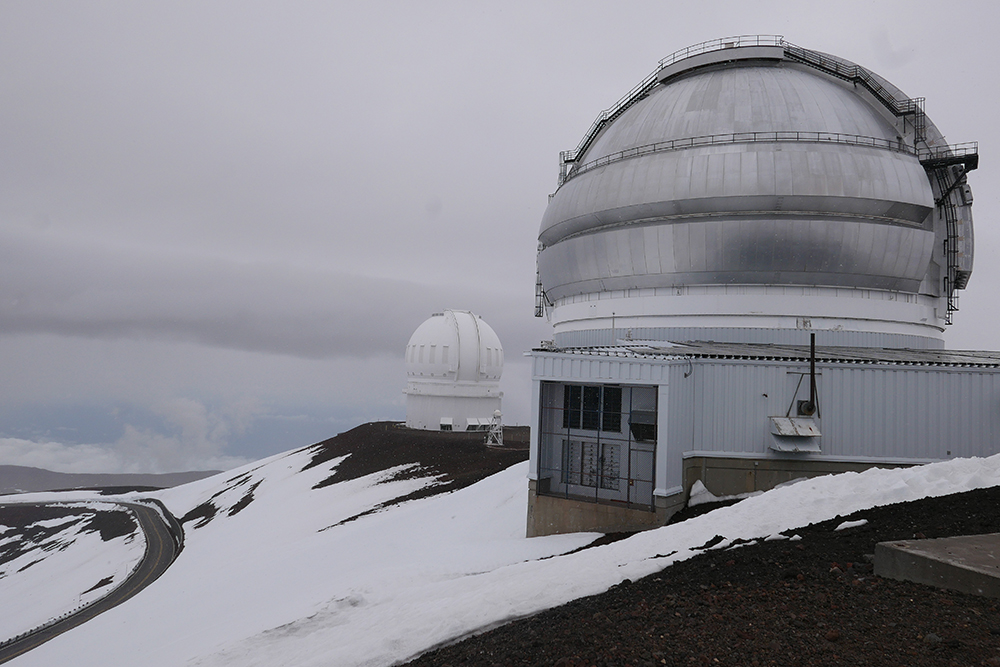
Mauna Kea volcano is the highest mountain in the world, measured from the bottom of the sea. It is considered a sacred place in the culture of Hawai’i. In this context, the famous and important telescopes on the top are always the cause of bitter disputes. The operation of drones is also not allowed on the mountain. However, a small robot made it on it in 2008. This was reported by several media outlets, including Science Daily. “During the field experiment, Nov. 1-13, the robot called Scarab will simulate a lunar mission to extract water, hydrogen, oxygen and other compounds that could potentially be mined for use by future lunar explorers. The four-wheeled robot will trek to different sites, using a Canadian-built drill to obtain a one-meter geologic core at each site. Each core will be chemically analyzed by on-board instruments developed by NASA.” (Science Daily, 14 October 2008) After that, it became increasingly difficult for robots to climb Mauna Kea. It is easier for scientists and tourists, who only need 4-wheel drive and robust health.

Robots in Hawai’i – Part 6

The west coast of the Big Island is known for its beautiful white sandy beaches and coral reefs, from Honomalino Beach in the south to Hapuna beach in the north. It is now threatened by climate change, drought, fire, invasive species, and human impact. The region of Hawai’i has been classified as a vulnerable ecosystem zone. A Boeing Company describes these dangers on its website and has developed technology to counteract the dangers. The Liquid Robotics Support Operations Test and Evaluation Facility in Kawaihae, Hawai’i is the main hub for Wave Glider development, ocean testing, and regional operations, as well as the birthplace of the Wave Glider. The Wave Glider sits on the surface and is connected to another device floating in the water eight meters below it. The two look like mother whale and baby whale, except baby whale is a little off. The Wave Glider is capable of collecting and communicating ocean data in real time through unpredictable conditions for up to a year. It connects and communicates undersea data to satellites and land, creating an ocean network. The Wave Glider is designed to support a wide variety of sensors and payloads. The modular and adaptable payload design is coupled with a powerful solar power system and on-board computing environment.

Robots in Hawai’i – Part 5

The K5, a security robot, comes from Knightscope in Silicon Valley. It can be seen there regularly. It provides, e.g., security at the Stanford Shopping Center. The conical robot is autonomous. It can see, hear, and even smell smoke and gas. The classic security robot also made it to Hawaii (Hawaiian: Hawai’i), for the first time in 2021, according to the Khon2 platform: “There is a new security guard getting a lot of attention at the Financial Plaza of the Pacific in downtown Honolulu, but it is not what you would think — it is actually a robot and the newest member of Bank of Hawaii’s security force. It looks like something out of a sci-fi movie – only it is actually real. Currently, the security robot is patrolling the busy area in and around the Bank of Hawaii’s Financial Plaza on Bishop and Merchant streets. For many people, the robot is a curiosity – attracting lots of odd looks – with some people capturing video and even posing for selfies. But many others, like Nasir Randall, are not quite sure what to make of it.” (Khon2, 28 October 2021) Security robots, along with cleaning robots and transport robots, are among the service robots that are largely error-free and already saving money. Over the next few years, they are likely to become widely used and accepted around the world.