Sundar Pichai, the CEO of Google and Alphabet, announced the answer to ChatGPT in a blog post dated February 6, 2023. According to him, Bard is an experimental conversational AI service powered by LaMDA. It has been opened to trusted testers and will be made available to the public in the coming weeks. “Bard seeks to combine the breadth of the world’s knowledge with the power, intelligence and creativity of our large language models. It draws on information from the web to provide fresh, high-quality responses. Bard can be an outlet for creativity, and a launchpad for curiosity, helping you to explain new discoveries from NASA’s James Webb Space Telescope to a 9-year-old, or learn more about the best strikers in football right now, and then get drills to build your skills.” (Sundar Pichai 2023) In recent weeks, Google had come under heavy pressure from OpenAI’s ChatGPT. It was clear that they had to present a comparable application based on LaMDA as soon as possible. In addition, Baidu wants to launch the Ernie Bot, which means another competing product. More information via blog.google/technology/ai/bard-google-ai-search-updates/.
The Latest Findings in Social Robotics
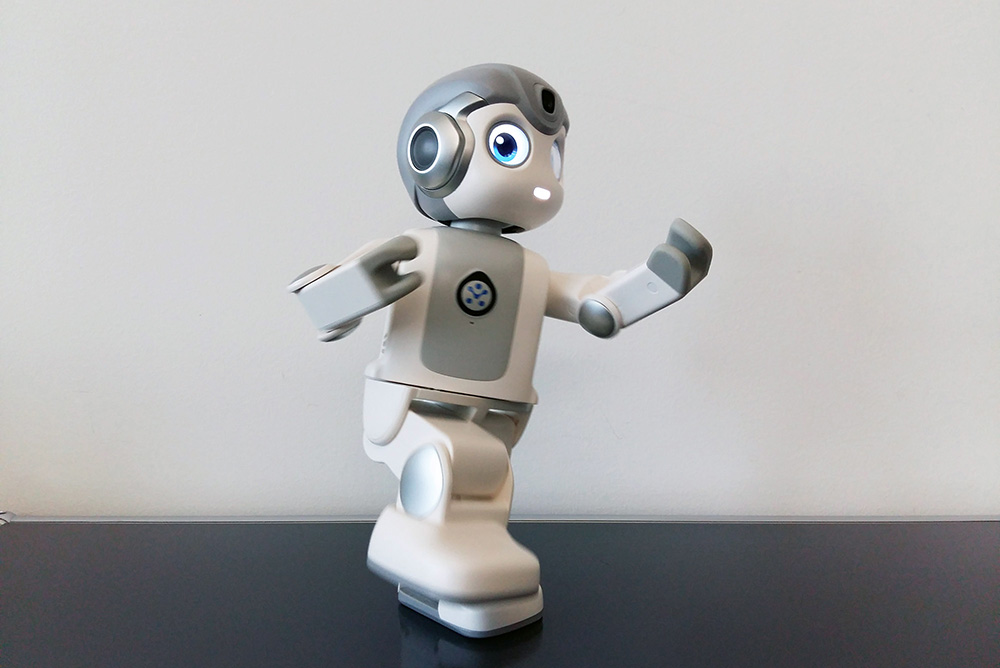
The proceedings of ICSR 2022 were published in early 2023. Included is the paper “The CARE-MOMO Project” by Oliver Bendel and Marc Heimann. From the abstract: “In the CARE-MOMO project, a morality module (MOMO) with a morality menu (MOME) was developed at the School of Business FHNW in the context of machine ethics. This makes it possible to transfer one’s own moral and social convictions to a machine, in this case the care robot with the name Lio. The current model has extensive capabilities, including motor, sensory, and linguistic. However, it cannot yet be personalized in the moral and social sense. The CARE-MOMO aims to eliminate this state of affairs and to give care recipients the possibility to adapt the robot’s ‘behaviour’ to their ideas and requirements. This is done in a very simple way, using sliders to activate and deactivate functions. There are three different categories that appear with the sliders. The CARE-MOMO was realized as a prototype, which demonstrates the functionality and aids the company in making concrete decisions for the product. In other words, it can adopt the morality module in whole or in part and further improve it after testing it in facilities.” The book (part II of the proceedings) can be downloaded or ordered via link.springer.com/book/10.1007/978-3-031-24670-8.
How People React to Hugs from Robots
As part of the AAAI 2023 Spring Symposia in San Francisco, the symposium “Socially Responsible AI for Well-being” is organized by Takashi Kido (Teikyo University, Japan) and Keiki Takadama (The University of Electro-Communications, Japan). The paper “Increasing Well-being and Health through Robotic Hugs” by Oliver Bendel, Andrea Puljic, Robin Heiz, Furkan Tömen, and Ivan De Paola was accepted. Among other things, they show how people in Switzerland react to robotic hugs. The talk will take place between March 26 and 29, 2023 at Hyatt Regency, San Francisco Airport. The symposium website states: “For our happiness, AI is not enough to be productive in exponential growth or economic/financial supremacies but should be socially responsible from the viewpoint of fairness, transparency, accountability, reliability, safety, privacy, and security. For example, AI diagnosis system should provide responsible results (e.g., a high-accuracy of diagnostics result with an understandable explanation) but the results should be socially accepted (e.g., data for AI (machine learning) should not be biased (i.e., the amount of data for learning should be equal among races and/or locations). Like this example, a decision of AI affects our well-being, which suggests the importance of discussing ‘What is socially responsible?’ in several potential situations of well-being in the coming AI age.” (Website AAAI) According to the organizers, the first perspective is “(Individually) Responsible AI”, which aims to clarify what kinds of mechanisms or issues should be taken into consideration to design Responsible AI for well-being. The second perspective is “Socially Responsible AI”, which aims to clarify what kinds of mechanisms or issues should be taken into consideration to implement social aspects in Responsible AI for well-being. More information via www.aaai.org/Symposia/Spring/sss23.php#ss09.
How Customers React to Bar Robots
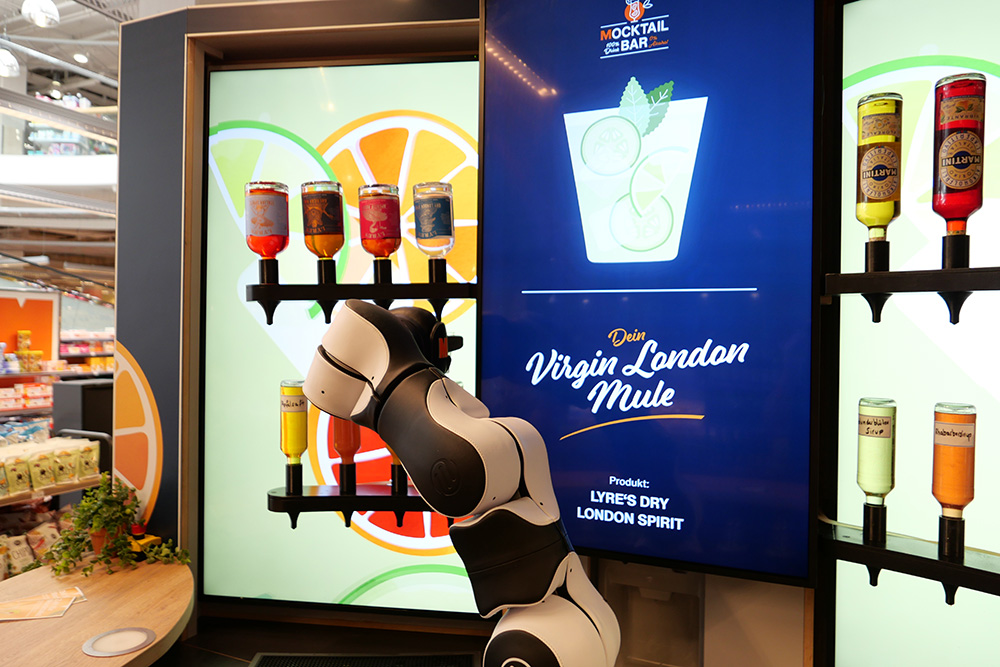
As part of the AAAI 2023 Spring Symposia in San Francisco, the symposium “Socially Responsible AI for Well-being” is organized by Takashi Kido (Teikyo University, Japan) and Keiki Takadama (The University of Electro-Communications, Japan). The paper “How Can Bar Robots Enhance the Well-being of Guests?” by Oliver Bendel and Lea K. Peier was accepted. Among other things, they show how customers in Switzerland react to bar robots. The talk will take place between March 26 and 29, 2023 at Hyatt Regency, San Francisco Airport. The symposium website states: “For our happiness, AI is not enough to be productive in exponential growth or economic/financial supremacies but should be socially responsible from the viewpoint of fairness, transparency, accountability, reliability, safety, privacy, and security. For example, AI diagnosis system should provide responsible results (e.g., a high-accuracy of diagnostics result with an understandable explanation) but the results should be socially accepted (e.g., data for AI (machine learning) should not be biased (i.e., the amount of data for learning should be equal among races and/or locations). Like this example, a decision of AI affects our well-being, which suggests the importance of discussing ‘What is socially responsible?’ in several potential situations of well-being in the coming AI age.” (Website AAAI) According to the organizers, the first perspective is “(Individually) Responsible AI”, which aims to clarify what kinds of mechanisms or issues should be taken into consideration to design Responsible AI for well-being. The second perspective is “Socially Responsible AI”, which aims to clarify what kinds of mechanisms or issues should be taken into consideration to implement social aspects in Responsible AI for well-being. More information via www.aaai.org/Symposia/Spring/sss23.php#ss09.
A Slime Mold in a Smartwatch
Jasmine Lu and Pedro Lopes of the University of Chicago published a paper in late 2022 describing the integration of an organism – the single-celled slime mold Physarum Polycephalum – into a wearable. From the abstract: “Researchers have been exploring how incorporating care-based interactions can change the user’s attitude & relationship towards an interactive device. This is typically achieved through virtual care where users care for digital entities. In this paper, we explore this concept further by investigating how physical care for a living organism, embedded as a functional component of an interactive device, also changes user-device relationships. Living organisms differ as they require an environment conducive to life, which in our concept, the user is responsible for providing by caring for the organism (e.g., feeding it). We instantiated our concept by engineering a smartwatch that includes a slime mold that physically conducts power to a heart rate sensor inside the device, acting as a living wire. In this smartwatch, the availability of heart-rate sensing depends on the health of the slime mold – with the user’s care, the slime mold becomes conductive and enables the sensor; conversely, without care, the slime mold dries and disables the sensor (resuming care resuscitates the slime mold).” (Lu and Lopes 2022) The paper “Integrating Living Organisms in Devices to Implement Care-based Interactions” can be downloaded here.
LaborDigital Conference at the ZHdK
The LaborDigital conference at the Zurich University of the Arts (ZHdK) will take place on February 10, 2023 in English and German. It was initiated and organized by Charlotte Axelsson and others. The conference will open with a lecture by Prof. Dr. Johan Frederik Hartle, Rector of the Academy of Fine Arts Vienna. This will be followed by the keynote “Labor-Geschichte/s. On the Archaeology of a ‘Creative’ Space” by Prof. Dr. Oliver Ruf from the Bonn-Rhein-Sieg University of Applied Sciences. From 11:00 to 12:30, three Experimental Learning Labs will take place in parallel, namely “Artifacts of Machine Ethics” with Prof. Dr. Oliver Bendel (FHNW, Muttenz, Olten and Brugg-Windisch), “Dance Lab & Avatar” with Regina Bäck (Munich), and “Experimental Game Cultures Labs” with Prof. Dr. Margarete Jahrmann (University of Applied Arts Vienna). Lunch will be followed by ZHdK Lab Visits and more Experimental Learning Labs starting at 3:30 pm. At 4:30 p.m., Raphaële Bidault-Waddington, founder of the LIID Future Lab in Paris, will deliver the second keynote, titled “Designing Art-based Future Labs.” Johan Frederik Hartle will conclude the conference with further remarks. For more information, visit paul.zhdk.ch/course/view.php?id=2312.
Atlas Finally has Hands
“Boston Dynamics just released the latest demo of its humanoid robot, Atlas. The robot could already run and jump over complex terrain thanks to its feet. Now, the robot has hands, per se. These rudimentary grippers give the robot new life. Suddenly, instead of being an agile pack mule, the Atlas becomes something closer to a human, with the ability to pick up and drop off anything it can grab independently.” (TechCrunch, January 18, 2023) This was reported by TechCrunch on January 18, 2023. Hands are actually very important for Atlas. The humanoid robot could now pick up or move heavy objects on a construction site. But it could also take care of trapped or injured animals in a nature park, freeing them or providing them with food and water. Such visions have been described by robot ethicist and machine ethicist Oliver Bendel for some time. A video released on January 18, 2023 shows the grippers picking up construction lumber and a nylon tool bag. “Next, the Atlas picks up a 2×8 and places it between two boxes to form a bridge. The Atlas then picks up a bag of tools and dashes over the bridge and through construction scaffolding. But the tool bag needs to go to the second level of the structure – something Atlas apparently realized and quickly throws the bag a considerable distance.” (TechCrunch, January 18, 2023) At the end of the video, Atlas does a somersault and then extends its hand – its brand new hand – triumphantly.
The HUGGIE Project II
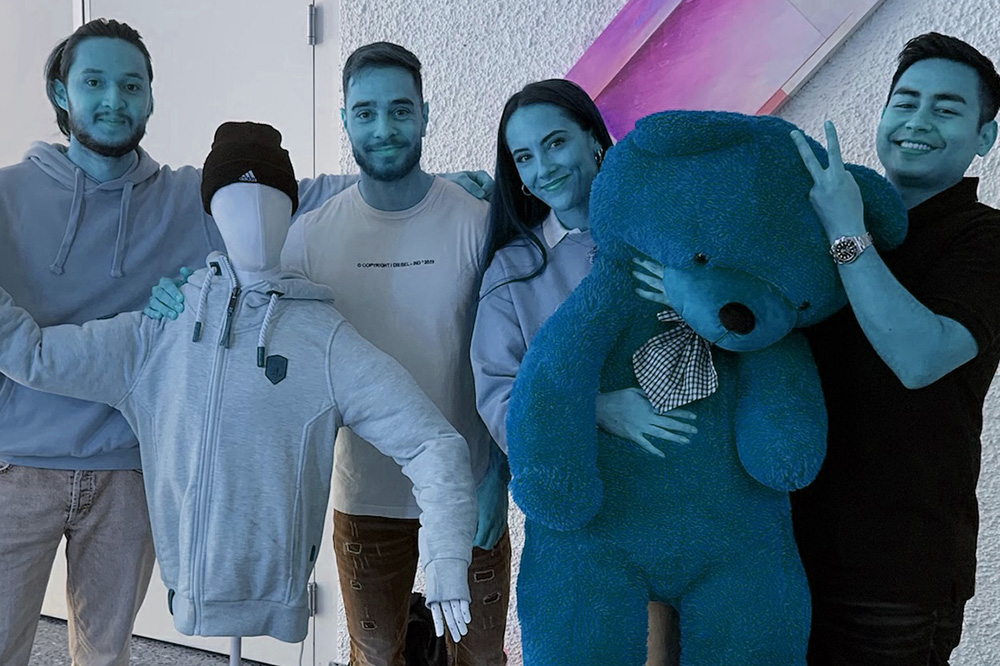
A large survey on hugging robots was already conducted in 2020 (HUGGIE Project I). The results were published by Leonie Stocker, Ümmühan Korucu, and Oliver Bendel in the book chapter “In den Armen der Maschine” (“In the arms of the machine”) in the Springer volume “Soziale Roboter” (“Social Robots”) . In the summer of 2022, another project was announced at the School of Business FHNW, called HUGGIE Project II in distinction to the previous project. A team of four was recruited, with Andrea Puljic, Robin Heiz, Furkan Tömen, and Ivan De Paola. The task was to build and test a hugging robot called HUGGIE. In doing so, the results of HUGGIE Project I were to be used as a basis. In particular, it was to be determined whether a robotic hug contributes to well-being and health and whether voice and vibration as a simulation of the heartbeat as well as scent increase the acceptance of the hug by a robot. Thus, indications from the survey in HUGGIE Project I were included. Furthermore, hugs with a giant stuffed animal named Teddy took place for comparison. The results show that people benefit from robotic hugs and that these can increase their well-being and health as a result. There was clear evidence of this in the pretest, and still sufficient evidence in the main test. However, some already have an aversion to robotic hugs in their imagination – as HUGGIE Project I revealed – which in turn some also showed in reality (HUGGIE Project II). Warmth and softness of body and arms are important. This was already proven by the research of Alexis E. Block and Katherine J. Kuchenbecker. Voice, vibration, and scent were found to be less relevant. However, there is significant indication that a female voice can increase acceptance and therefore needs to be further explored and adapted in this context. The findings were summarized in a paper and submitted to an international conference (Photo: Furkan Tömen).
The @ve Project
On January 19, 2023, the final presentation was held for the @ve project, which started in September 2022. The chatbot runs on the website www.ave-bot.ch and on Telegram. Like ChatGPT, it is based on GPT-3 from OpenAI (@ve is not GPT-3.5, but GPT-3.0). The project was initiated by Prof. Dr. Oliver Bendel, who wants to devote more time to dead, extinct, and endangered languages. @ve was developed by Karim N’diaye, who studied business informatics at the Hochschule für Wirtschaft FHNW. You can talk to her in Latin, i.e. in a dead language that thus comes alive in a way, and ask her questions about grammar. It was tested by a relevant expert. One benefit, according to Karim N’diaye, is that you can communicate in Latin around the clock, thinking about what and how to write. One danger, he says, is that there are repeated errors in the answers. For example, sometimes the word order is not correct. In addition, it is possible that the meaning is twisted. This can happen with a human teacher, and the learner should always be alert and look for errors. Without a doubt, @ve is a tool that can be profitably integrated into Latin classes. There, students can report what they have experienced with it at home, and they can have a chat with it on the spot, alone or in a group, accompanied by the teacher. A follow-up project on an endangered language has already been announced (Illustration: Karim N’diaye/Unsplash).
AI for Well-being
As part of the AAAI 2023 Spring Symposia in San Francisco, the symposium “Socially Responsible AI for Well-being” is organized by Takashi Kido (Teikyo University, Japan) and Keiki Takadama (The University of Electro-Communications, Japan). The AAAI website states: “For our happiness, AI is not enough to be productive in exponential growth or economic/financial supremacies but should be socially responsible from the viewpoint of fairness, transparency, accountability, reliability, safety, privacy, and security. For example, AI diagnosis system should provide responsible results (e.g., a high-accuracy of diagnostics result with an understandable explanation) but the results should be socially accepted (e.g., data for AI (machine learning) should not be biased (i.e., the amount of data for learning should be equal among races and/or locations). Like this example, a decision of AI affects our well-being, which suggests the importance of discussing ‘What is socially responsible?’ in several potential situations of well-being in the coming AI age.” (Website AAAI) According to the organizers, the first perspective is “(Individually) Responsible AI”, which aims to clarify what kinds of mechanisms or issues should be taken into consideration to design Responsible AI for well-being. The second perspective is “Socially Responsible AI”, which aims to clarify what kinds of mechanisms or issues should be taken into consideration to implement social aspects in Responsible AI for well-being. More information via www.aaai.org/Symposia/Spring/sss23.php#ss09.