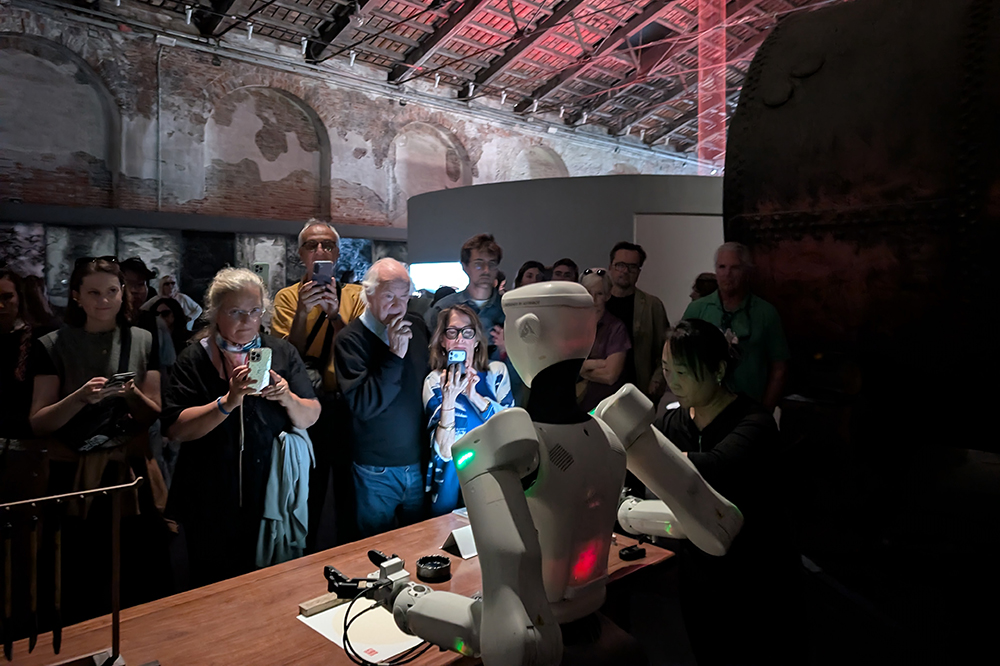
Can robots and AI systems be creative? Since the rise of generative AI, this question has been the subject of intense debate. The issue is not merely whether machines can produce images, texts, or music. It is also about what we understand by creativity and art in the first place, and whether they are necessarily tied to human beings. The Biennale Arte 2026 could have been an excellent place to engage in this debate. In fact, it does so only occasionally. In the Chinese Pavilion, the humanoid robot Astribot S1 writes in the style of calligraphy master Wang Dongling. Visitors can take the works of art, if that is what they are, home with them. Zhang Zhoujie, meanwhile, has computers develop forms for his “digital chairs” based on predefined rules. The designer tries to exercise as little control as possible, giving the computer a degree of creative freedom of its own. In the Venice Pavilion, “Echo/SommersiVo” uses artificial intelligence to translate visitors’ memories and impressions into a constantly changing world of sound and images. Those involved explicitly describe the process as a collaboration between humans and AI in the creative process. These are interesting approaches, but they remain exceptions. At a time when generative AI is challenging our understanding of authorship, originality, and creativity, the world’s most important international exhibition of contemporary art barely addresses this development. The Biennale Arte 2026 did not have to answer the question of whether machines can be creative. But it should have asked it.
BY OLIVER BENDEL